
To read The Daily Call you must be a subscriber (Current members sign in here. ) Start your subscription today.
Category: Weekly Detail
Prompt July Breaks Down
To read The Daily Call you must be a subscriber (Current members sign in here. ) Start your subscription today.
Market May Be Showing Signs of Bias Change
To read The Daily Call you must be a subscriber (Current members sign in here. ) Start your subscription today.
June Expiration Follows History
To read The Daily Call you must be a subscriber (Current members sign in here. ) Start your subscription today.
Trend Line Destruction Takes Prices to Test Major Support
To read The Daily Call you must be a subscriber (Current members sign in here. ) Start your subscription today.
Strong Reversal Off of 200 Day
To read The Daily Call you must be a subscriber (Current members sign in here. ) Start your subscription today.
Higher Lows — Constructive
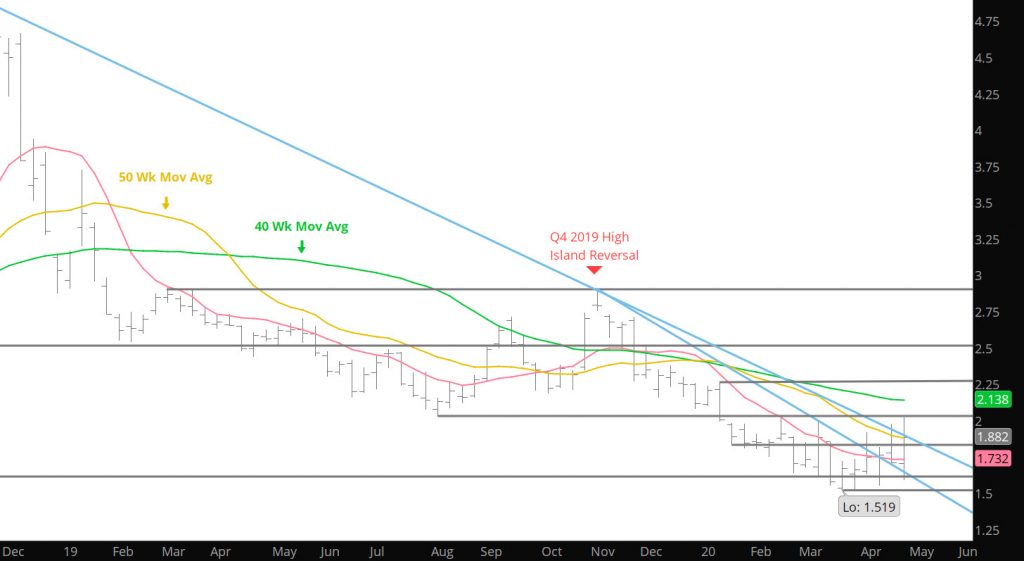
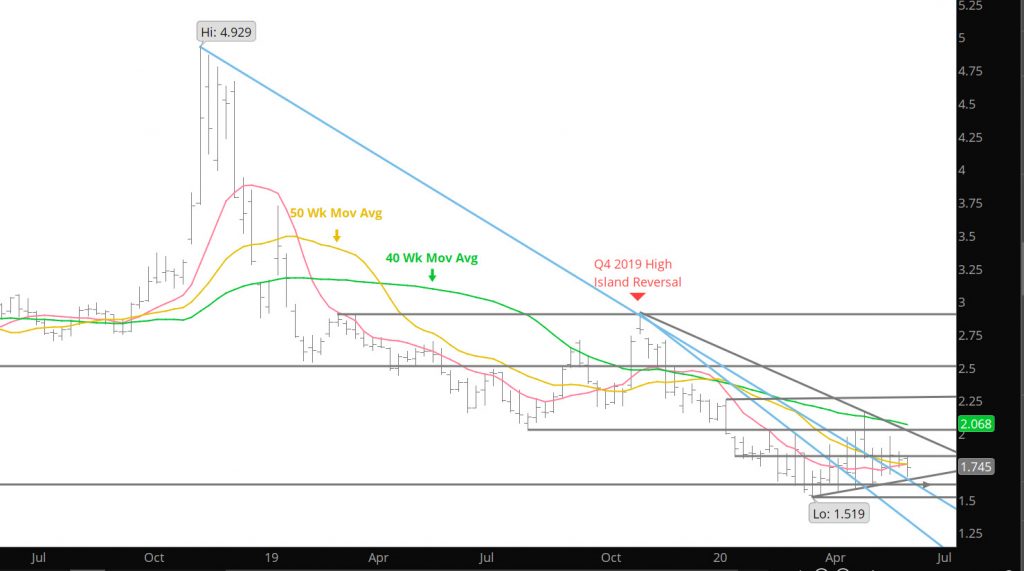
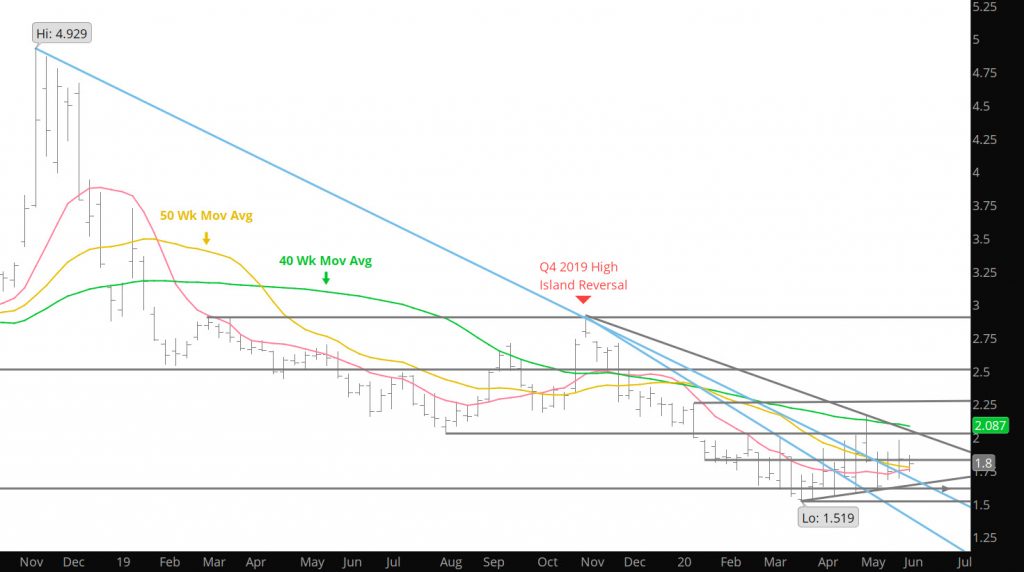
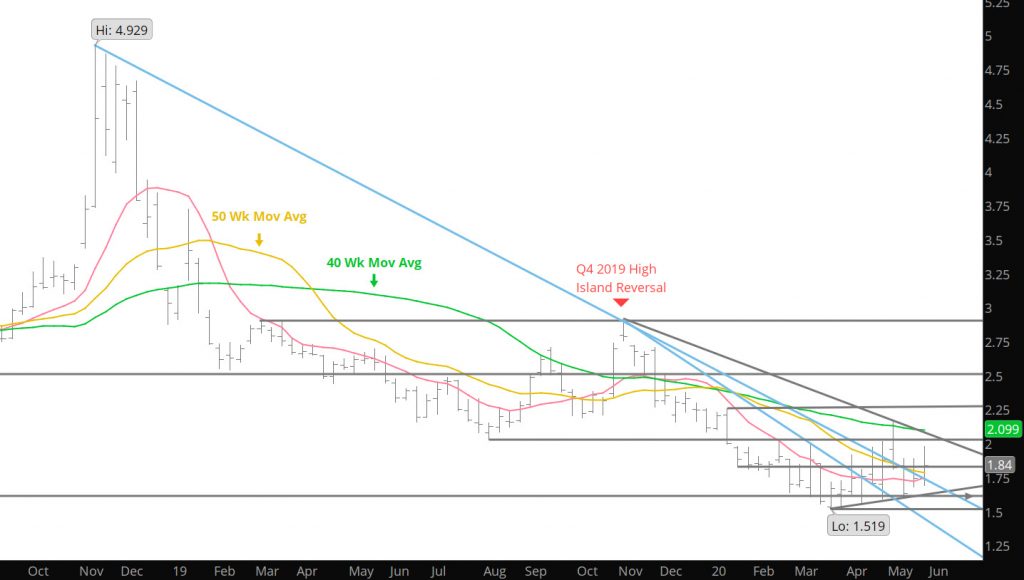
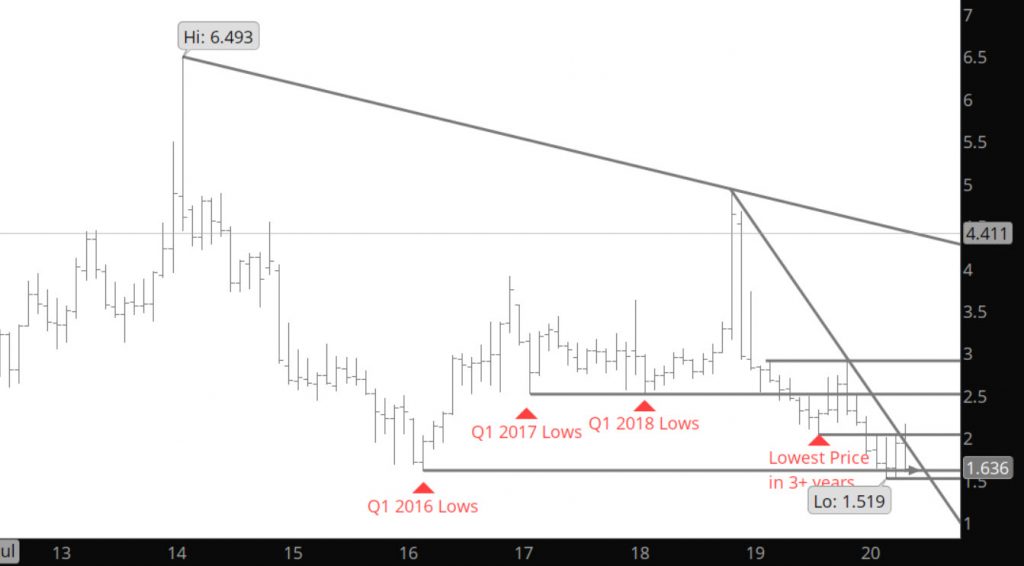
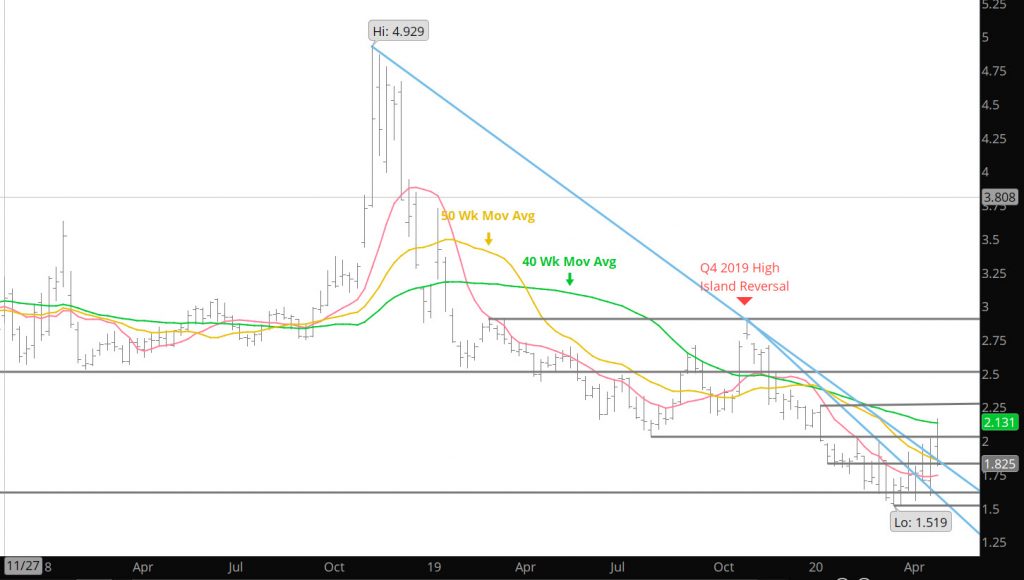
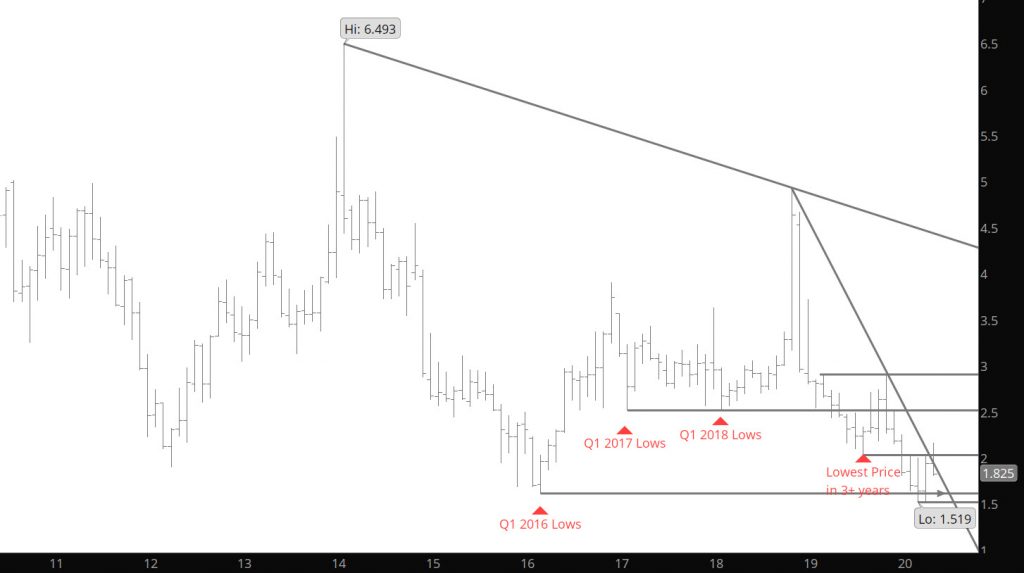
Last week continued the process of developing a consolidation process that will either lead the market to a break out (above the $2.029) area or a failure and a break below the key support area that has held prices for two months and four tests. An interesting note on trading, for the last three months, failure at the key resistance ($2.029) or near it resulted in an immediate test of support (within two weeks) as traders were content in working the range. Last week, prices could only manage a slight decline to $1.59 in the light trade around May expiration, before making another run at resistance. This action has now set the constructive behavior of higher weekly lows and another higher weekly close. Some of this behavior is clearly linked to the $.10 premium that June was awarded on expiration.
It you are bullish one of the concerns for you to overcome is the lack of volume last week. Markets successful in making a bias change usually occur with a volume break out in the direction of the upcoming bias shift. The continued strength in the differed contracts offsets this concerning issue and suggests the bullish argument more of “when” rather than “if”.
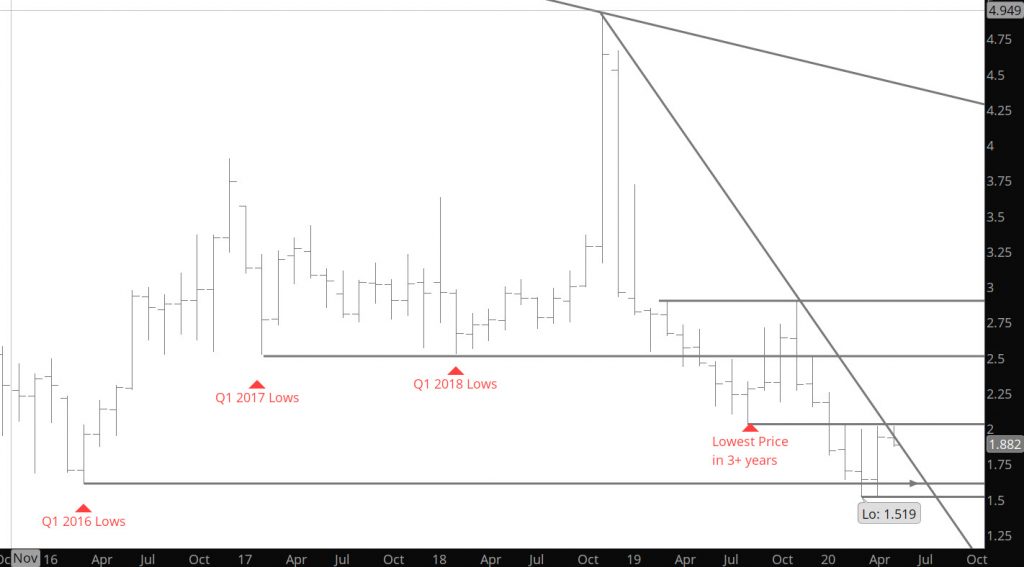
Calendar April ended as an “inside month” which is the first time that the trade range in April has remained inside he extremes provided during March since 1996. The high for the week was early on Friday morning, May 1st. Technical theory has suggests that and “inside” trade with falling volume (discussed above) and closing the month near the highs of previous period ($.03 shy of March high) is constructive for the intermediate term. Think of it as the sponsorship need to drive prices though the previous month’s extreme was lacking but closing near the highs — the balance of power was shifting.
Major Support: $1.611, $1.555-$1.519
Minor Support: $1.794, $1.78-$1.765
Major Resistance: $1.993-$2.025, $2.062,$2.08-$2.102
Minor Resistance: $1.968
Going Forward
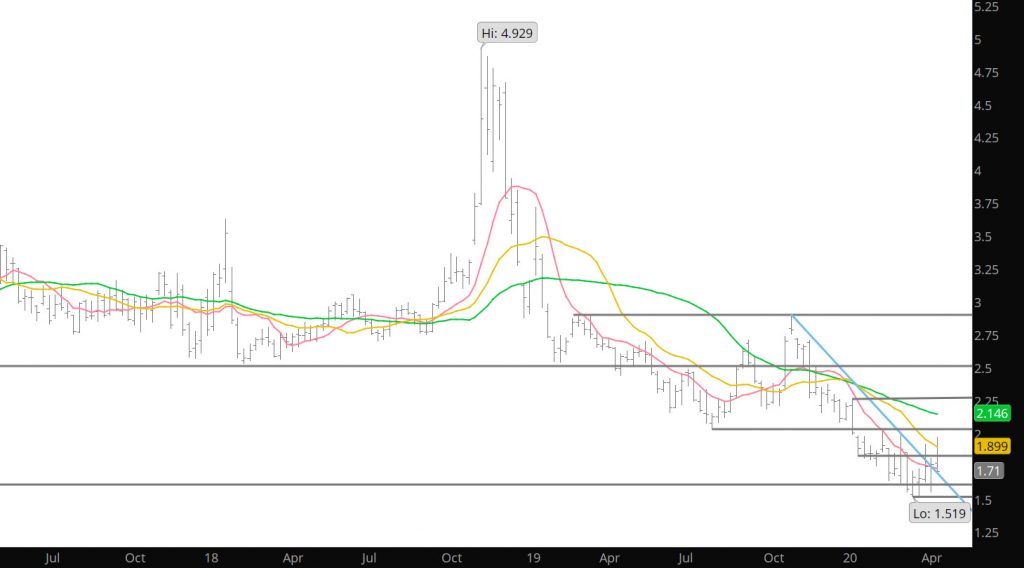
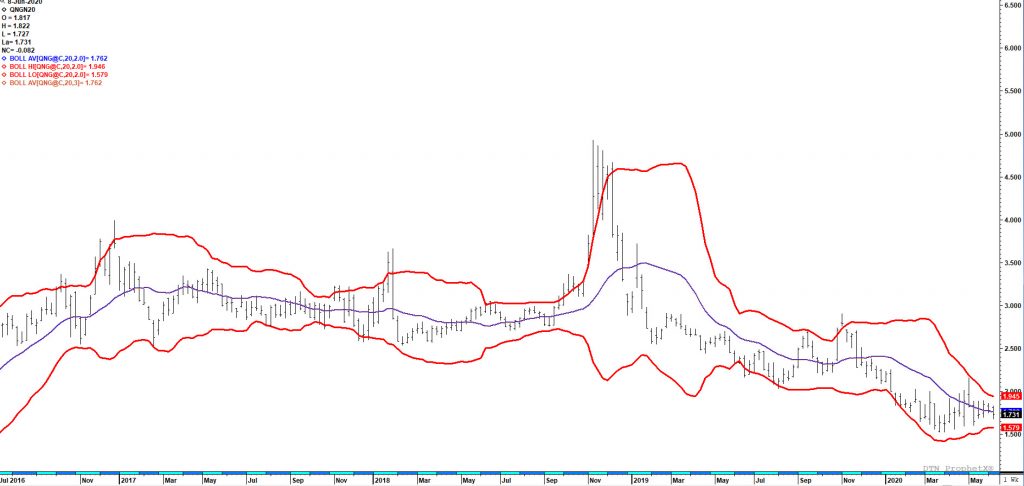
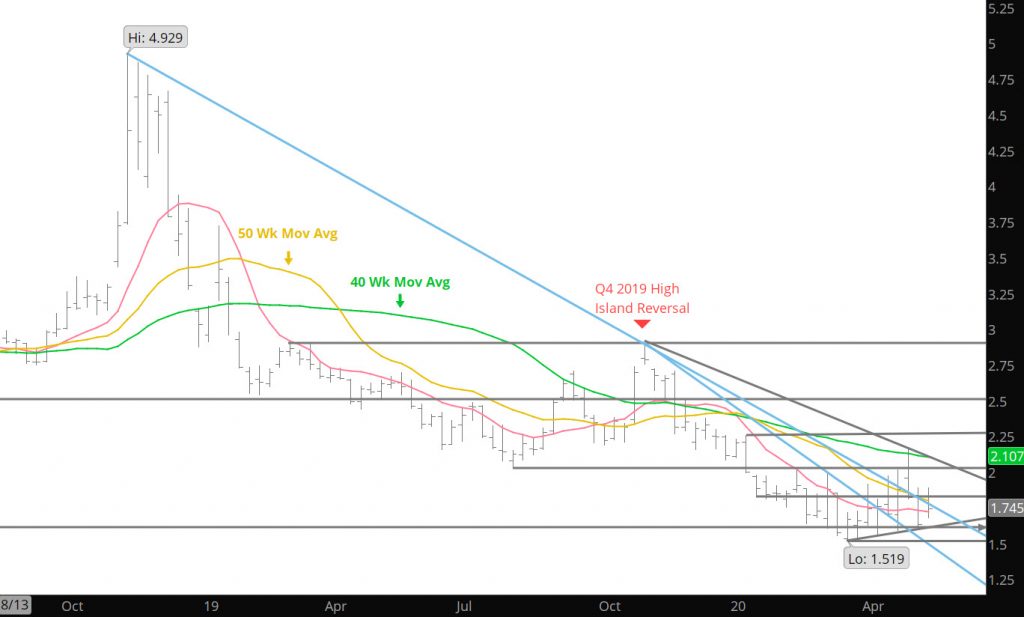
A series of close weekly closing prices have occurred during the May contract as prompt. Closing prices have been within a range of $.02 over the last three weeks ($1.733, $1.753 and $1.746). The two previous weeks were at $1.634 and $1.621. This type of price behavior usually precedes a significant price move as it has a tendency to bring attention to traders (yes we look at these elements in trade). In natural gas the last time this type of tight weekly closings was in December when there were four weekly closings ($2.281-$2.334) before prices before prices broke down and added to the recent Q1 declines. The previous tight weekly closes occurred last summer when prices constructed a tight weekly range between $2.119 and $2.169 over three weeks (July and August). This set up the rally to the September high ($2.71) and the eventual Q4 high of $2.905. I will be getting into the expectations of the June contract, as prompt, during this week with the final outlook next Sunday.
Comparing to 2016 (part 2)
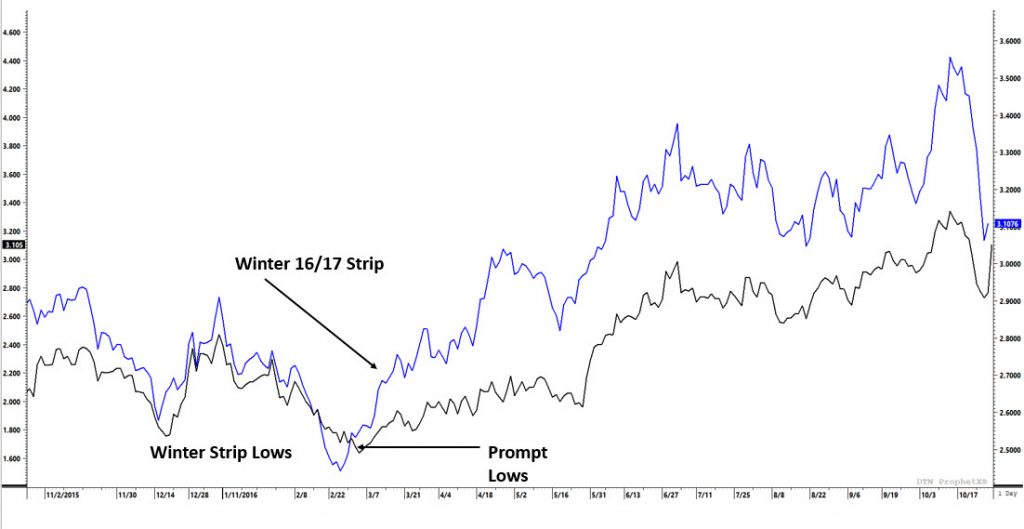
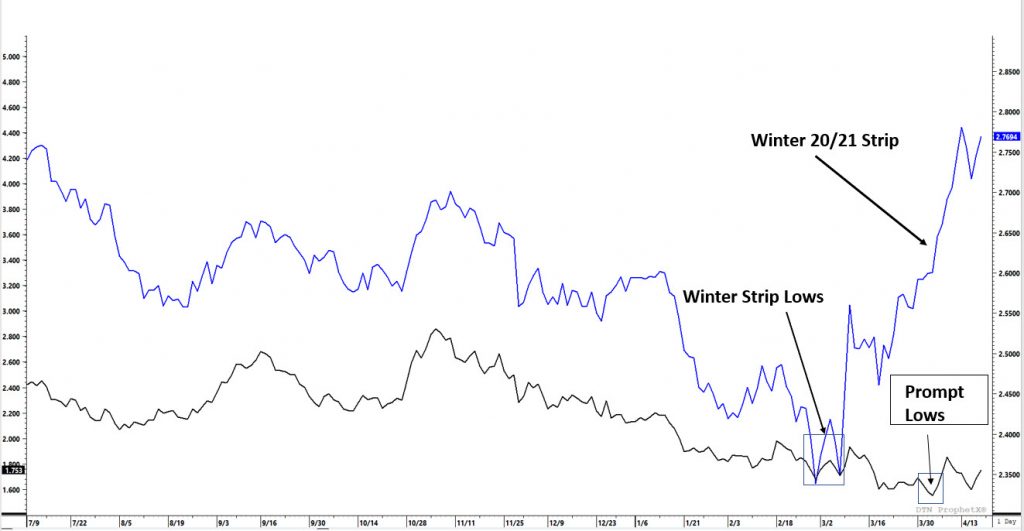
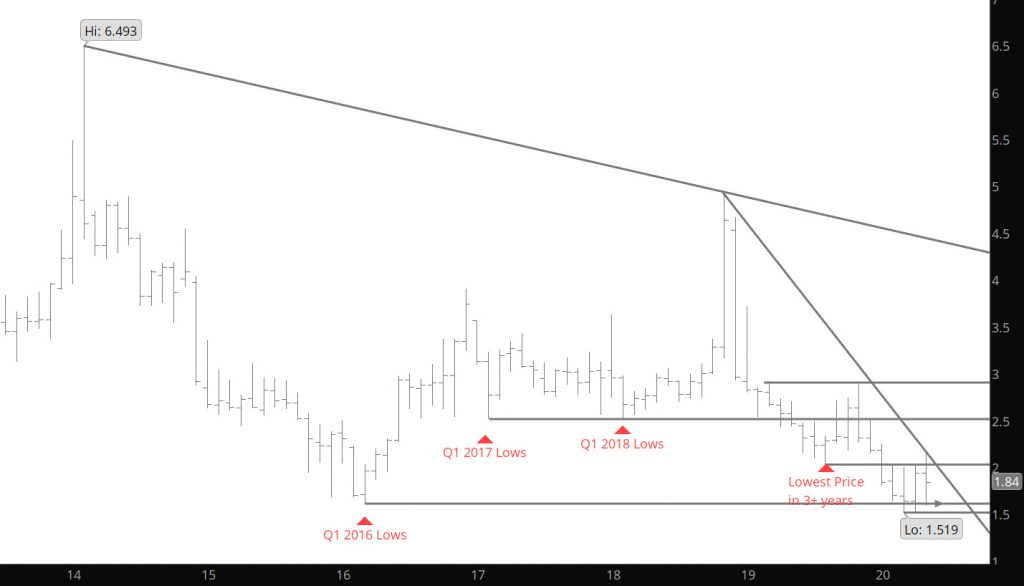
I wanted to bring to your attention the similarities to trade back in 2016 (last long term low) and this year. The two charts are clearly not identical, but often with natural gas, the trade action rhymes over time. In 2016 the market was coming off of a warm summer and the expectation of production overwhelming demand was evident in the price action. Do not want to go into the weeds about fundamental issues, I am more interested in highlighting the technical side of the trade and how history may be rhyming. In 2016 the low of the winter strip for winter 2016/17 traded in late February early March. Once that low had traded prices rallied from $2.45 and established an interim high of $3.04 in early May. This represents a 24% run in just 8 weeks. After a brief consolidation, prices extended the gains into Q2 (historically bullish period) and set the Q2 high for the winter strip at $3.37 in July (37.5% gain).
While the winter strip was behaving with this type of rally the prompt rallies into the summer were much stronger as prices ran from the lows of $1.61 to $2.17 (35% gain) in early May and then continued on to the Q2 high of $2.99 (86% gain) by July.
Look at the current chart comparing the winter 2020/21 to prompt. It looks like the lows were established last month at $2.35 and have been on a solid run since (similar to 2016). The winter now trades at $2.76 (a 17% gain) and should the trade equal the rally in 2016 it would take prices to $3.23 for the strip. While the prompt has not confirmed a low, there are indications that the selling is loosing steam (discussed here last week).
While no year copies a previous years price behavior, the similarities between this spring and 2016 are eye opening. 1) similar fundamental conditions, 2) similar price levels (lows at $1.61 in 2016 and $1.51 in 2020), 3) similar prices in the winter strips ($2.35 this year versus $2.45 in 2016), 4) winter 20/21 strip has started its run. I bring this information on history to your attention and hope it was insightful for your trading strategy.
Market Lacks Bias Definition
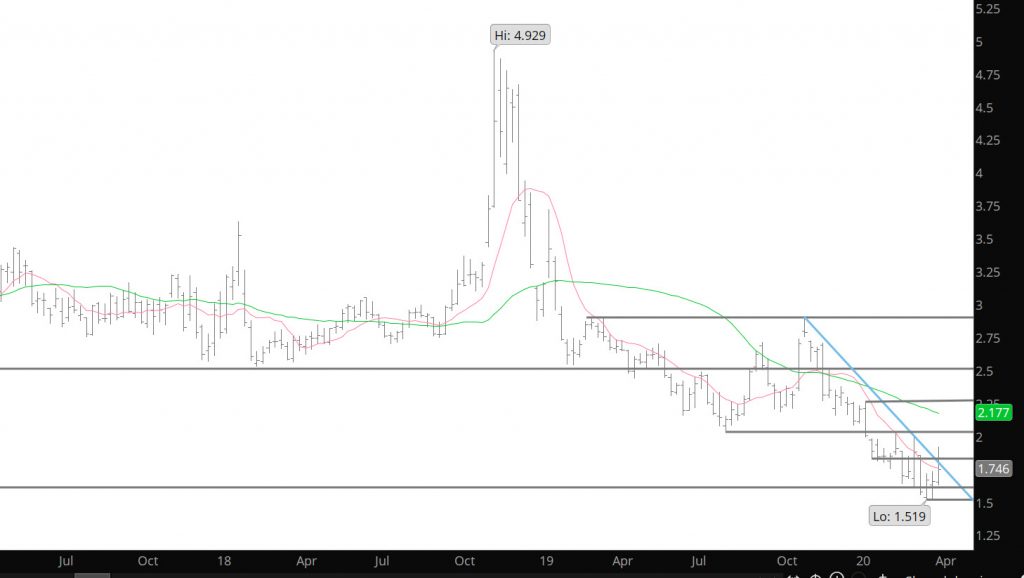
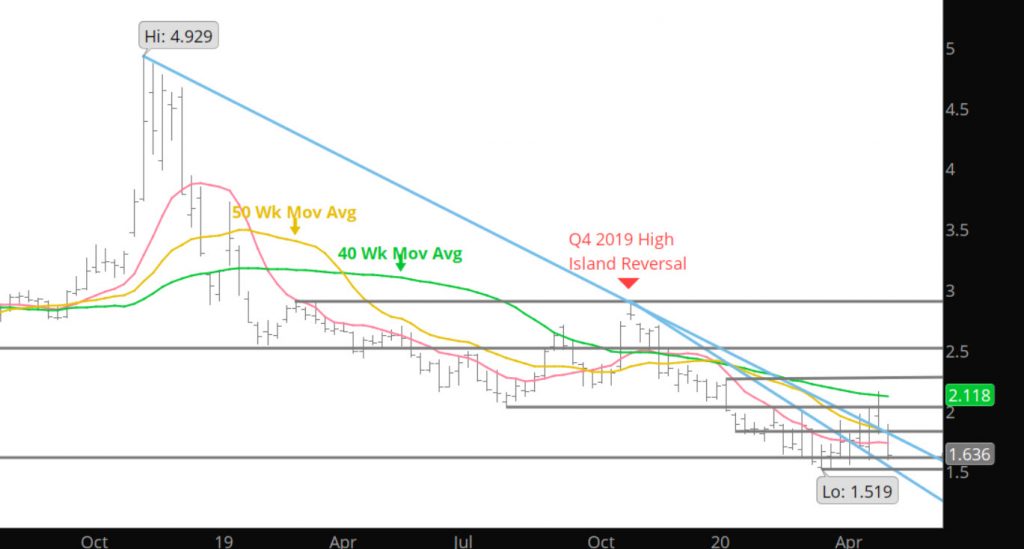
While managing to gain and close higher than the previous week’s high, there are considerable divergences showing up. Recently trade has had increased volume on up days and reduced volume on down days. While not getting the CFTC data on Friday, total open interest has declined significantly (over 320,000 contracts) since early February, with a large portion of those declines coming from the speculative Managed Money short position (discussed on this website several time last month). All of these events have occurred yet prompt prices have largely staying between $1.73 and $1.88. Lower lows since February have not been confirmed with RSI levels (weekly) creating yet another potential divergence.
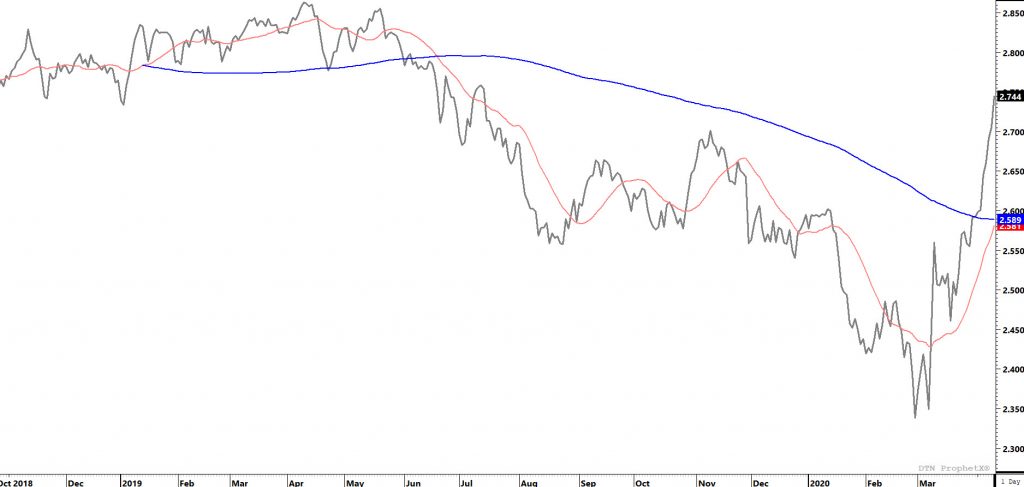
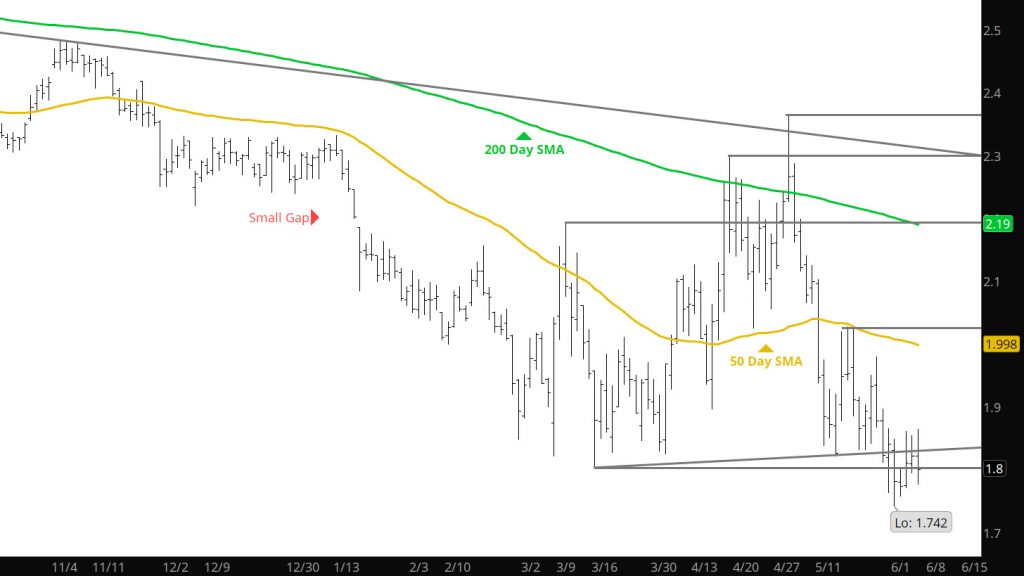
All of this seems to be confirming that the market is in a consolidation phase for the summer contracts. The same cannot be said for the winter 20/21 strip. These contracts continue to show sufficient sponsorship (see Chart above) to close above the 200 day Moving Average for the last seven trade days. This behavior to me suggests the market is slowly coming to the realization that the prevailing downtrend bias that has gripped the front end of the curve may not be around much longer. Look at the premium that June and July carry to the May prompt ($.13 and $.20 respectively), it is also showing a divergence developing in the trade. The period around May expiration will give us a clue for prices near term- as any premium afforded to the next contract has been quickly eroded post expiration.
Major Support: $1.611, $1.555–$1.519, $1.481
Major Resistance:$1.883, $1.993, $2.029, $2.08-$2.10, $2.34, $2.437,
Minor Resistance: $1.767-$1.78, $1.833