Declines Expected With Seasonal Weakness

Weekly Continuation

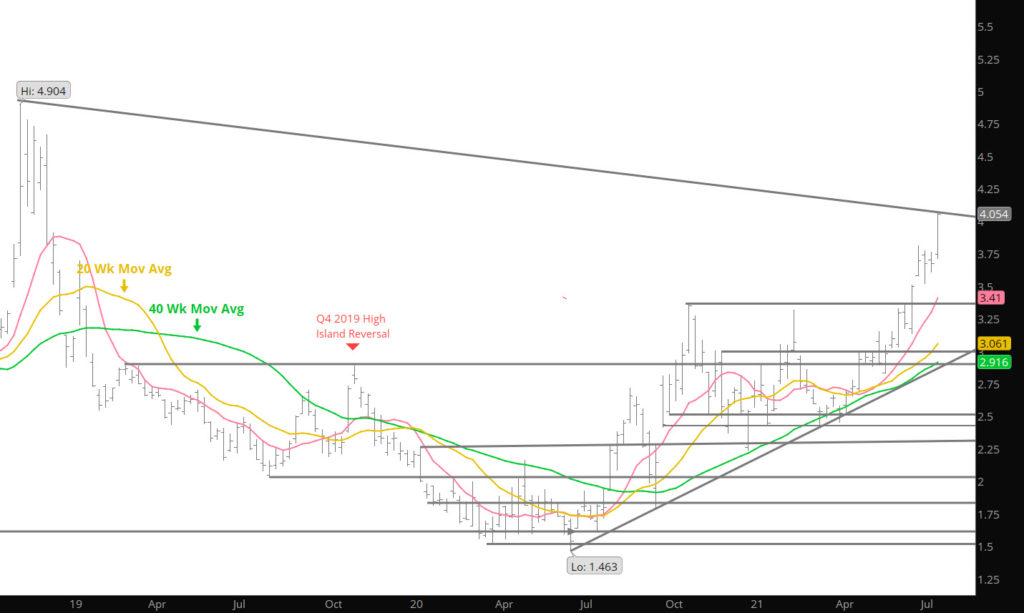
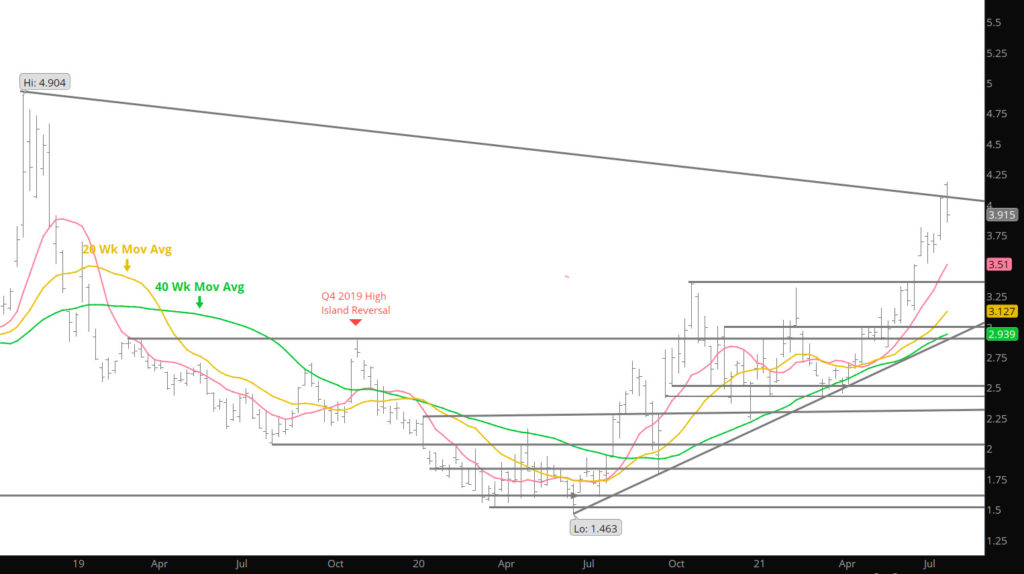
If you are familiar with my diatribes over the years, you will recognize one of my strongest historical references is the consistent annual weakness that occurs in Q3on the corrections after the Q2 upward trend in prices. This year will not be different except that the Q2 rally did not end in June (Q2) but spilled over to July (Q3). While it would be more accurate if the market were to conform to the agenda , as traders we need to be flexible (for instance the Q3 low occurred at the end of June as the July contract expired) with our “rules”. History shows us that prices have a tendency to rally in late spring into early summer and then take a hiatus in late summer and early fall. Why this occurs is far beyond my pay grade and don’t really care– focusing on the trade rather than the “why”.

Last week brought a glimpse of the seasonal weakness that should occur in the coming weeks, trading a reversal week after setting a high early in the week before reversing lower during expiration and the end of the week. August gas traded as high as 4.187 before settling at 4.044. That was the highest monthly settlement since December ’18 settled at 4.715. On a weekly closing basis, prompt gas traded a technically price negative reversal lower but without the volume spike that customarily accompanies intermediate term highs. That should provide eager bears with some food for thought. The market has not confirmed the “all clear” against additional runs.

To read The Daily Call you must be a subscriber (Current members sign in here. ) Start your subscription today.

Something Is Amiss

Weekly Continuation

Lots of charts this week with just some brief commentary about the market that is not trading “properly”. There is a slight odor beginning to emanate from price action though not sure what it is. Looking at the weekly chart above– it looks like a solid bull run with little or no correction for the last 8 weeks– that is not normal behavior (especially for natural gas). Some fundamental based traders tell me it is concerns about supplies going into the upcoming winter — at face value the market is not confirms such concerns. Look at the chart below:

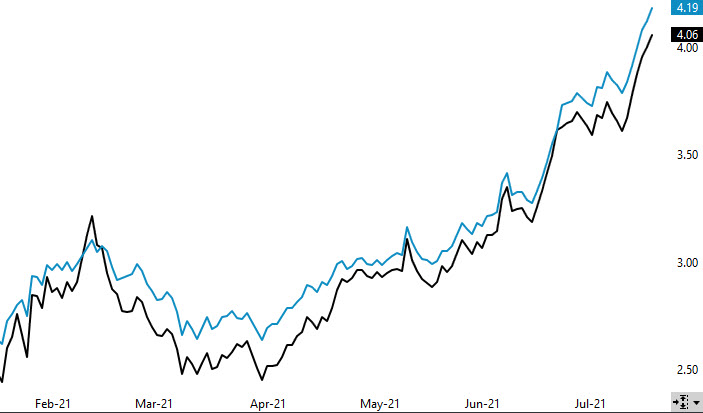
Jan 22 Daily Continuous vs Aug 21 Daily Continuous

The blue line reflects the upcoming Jan ’22 contract and has narrowed on the recent run to only $.13 over August. That does not reflect substantial concerns about the upcoming winter supplies. Much less– it takes the value of storage off the table as it doesn’t cover the carry costs much less the direct cost of storage. Winter should be rising at the pace of cash (or Aug) if winter was an issue. Perhaps it too will run later in the fall. When Aug corrected (very briefly) early in July the spread was out to $.20 which does reflect some concerns (prompt declines – winter declines less).

To read The Daily Call you must be a subscriber (Current members sign in here. ) Start your subscription today.

A Good Week to Go Fishing
Weekly Continuous

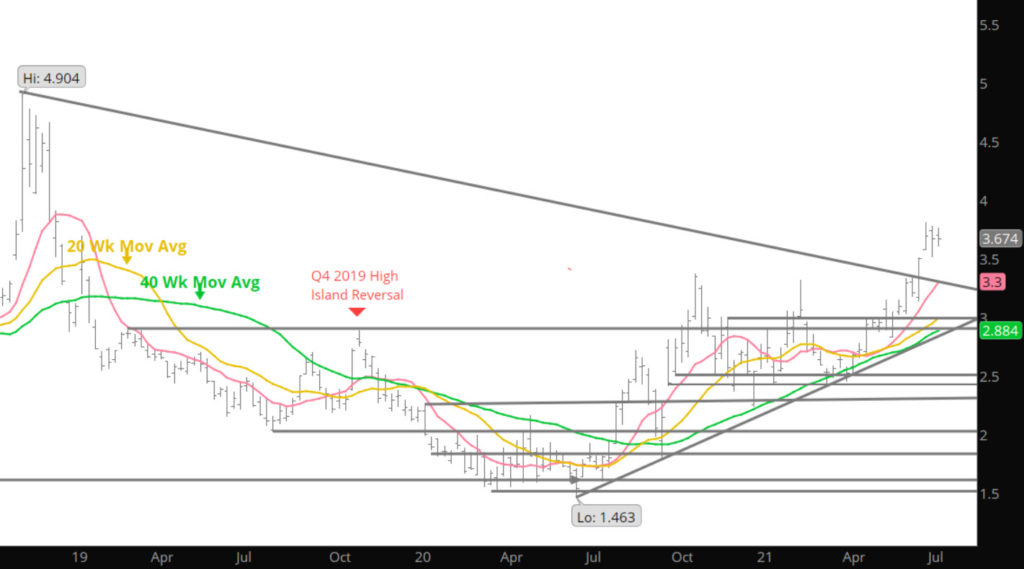
Gas traded an “inside” week — staying with in the previous week’s range and ended unchanged from last week’s close. I have tracked weekly ranges, opens and closes since the late ’90’s and I can’t think of the last time that the market closed almost exactly where it began (3.674 v 3.673). Friday’s close gave us three “tight” weekly closes (within $.026) which is also a pretty rare occurrence. This type of activity can clearly meets the standards of consolidation of the recent gains. Historically a market that is consolidating and struggling to establish momentum are usually resolved in the direction of the underlying trend with the release of technical “energy” that builds up during them triggers a significant range expansion.

That said, this market may be ready to attack higher levels but is missing some key indicators. Average daily volume has, on balance, declined since early June, while total open interest has increased significantly. Discussed here many times, bull markets have to keep feeding the beast. While it is good to see the gains in open interest, the change in “open interest” over time is a “lagging” indicator but historically substantial increases are inevitably followed by price declines while exceptionally low levels of open interest are characteristic of the construction of a low. Since the April low, the total number of contracts open in the market has increased from 1,164,269 to 1,466,459 (about 26% after already having increased from 1,117,622 with the January low). The last 155,057 of that increase has occurred since last month’s breakout through the October – November – February highs. That is a lot of new buying (which increases upside pressure on the bid) for a market that has gone absolutely nowhere for most of the last three weeks.

To read The Daily Call you must be a subscriber (Current members sign in here. ) Start your subscription today.

The Bull Run Continues
I need to clear up some house keeping issues– I am fishing for Walleyes this week at a lake in Montana. There is no cell service nor internet service at this area so there will be no Daily nor Weekly until my return on July 13th.

Weekly Continuous

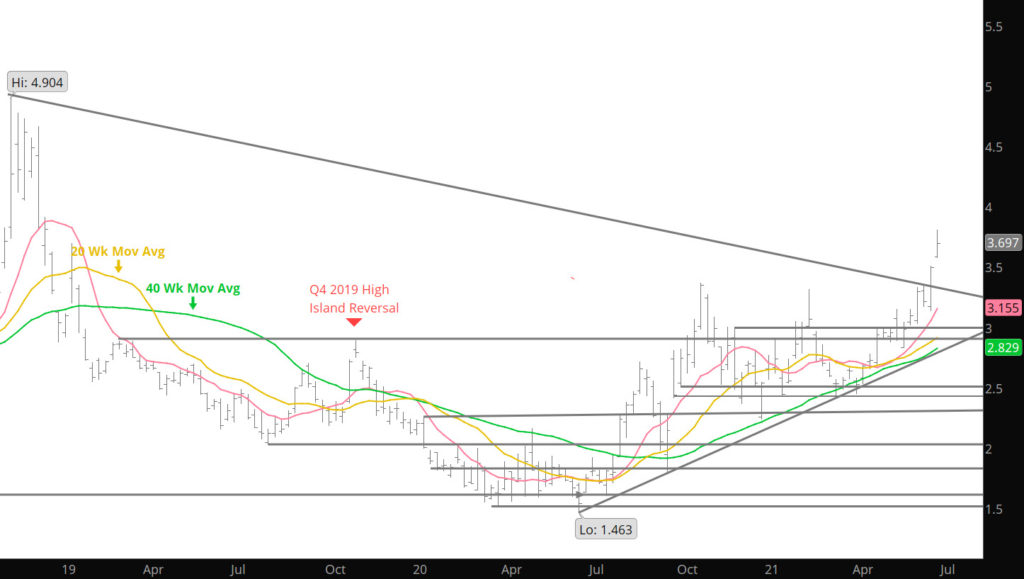
That said — this gas market is rocking as previous highs, that had kept a lid on prices rallies for two years, fell like lead weights on a lure. As noted here, I had been expecting some pull back and consolidation during this three week run, only to be shown the exit ramp. As mentioned several times this activity has brought the current overbought condition . Looking at two of my favorite condition studies; 1) standard deviation study (below) showing prompt gas closing between two and three standard deviations above the intermediate term 20 – week SMA for the third time in four weeks. This is a rate occurrence. There were two closes there in November of ’19 and there were four during the initial blast off from an extended trading range last summer. In both of those recent examples prompt gas traded back to and through the 20 – week less than a month later.

To read The Daily Call you must be a subscriber (Current members sign in here. ) Start your subscription today.

July Contract Rally Has Work to Do
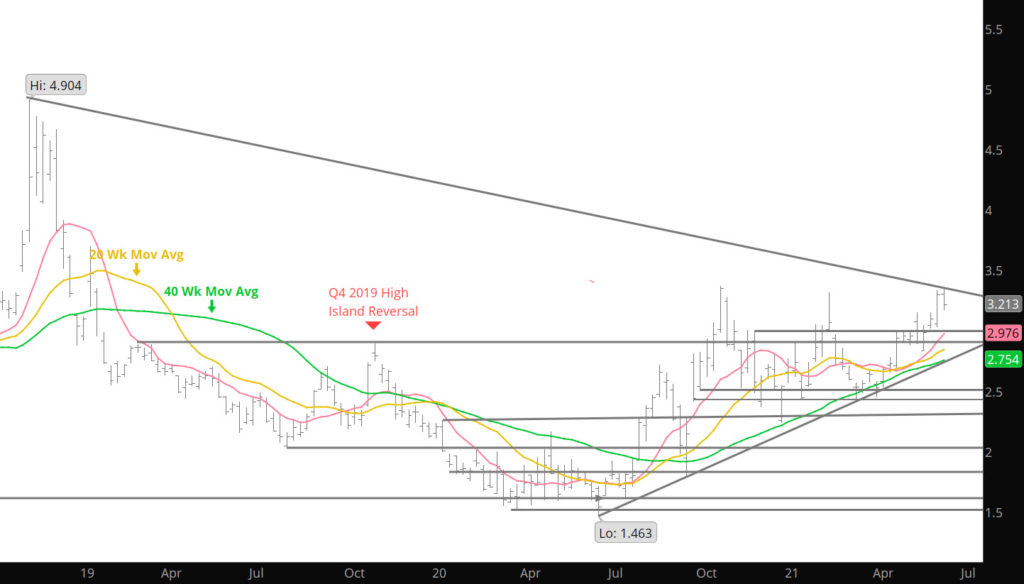
Weekly Continuous

Last week, prompt July posted a new contract high and on Tuesday the prompt pushed a little further into the resistance zone between the February and October highs and appeared ready to test resistance presented by the October and November ’20 highs. July made it as far as 3.369 but with substantially reduced volume (333,249 contracts vs 633,921 on Monday) reversed lower and failed to find adequate support at/above Monday’s low. Trading a daily reversal with with increasing volume led to a lower weekly close after trading a rally high with weekly volume significantly less than the prior week. As discussed here numerous times that rallies need to be fed (volume), and that volume divergence (a higher high on lower volume) is a strong suggestion that July has traded the high of its tenure– whether it is the Q2 high remains to be seen.

Rallies from Q1 lows to Q2 highs have averaged 38.2% over the last ten years, 39.8% over the last five (43.4% over the last twenty). With last weeks rally from the March 18th low at 2.422 to this past week’s June high at 3.369 prompt gas has rallied .947, or 39.1%. That is fairly close to the five- and ten-year averages– but I am not convinced that the strength is finished (yes- I realize that a rally in July takes it out of the Q2 — but last June’s low at $1.42 was out of the Q3 but was the Q3 low).

To read The Daily Call you must be a subscriber (Current members sign in here. ) Start your subscription today.

Lots Happening
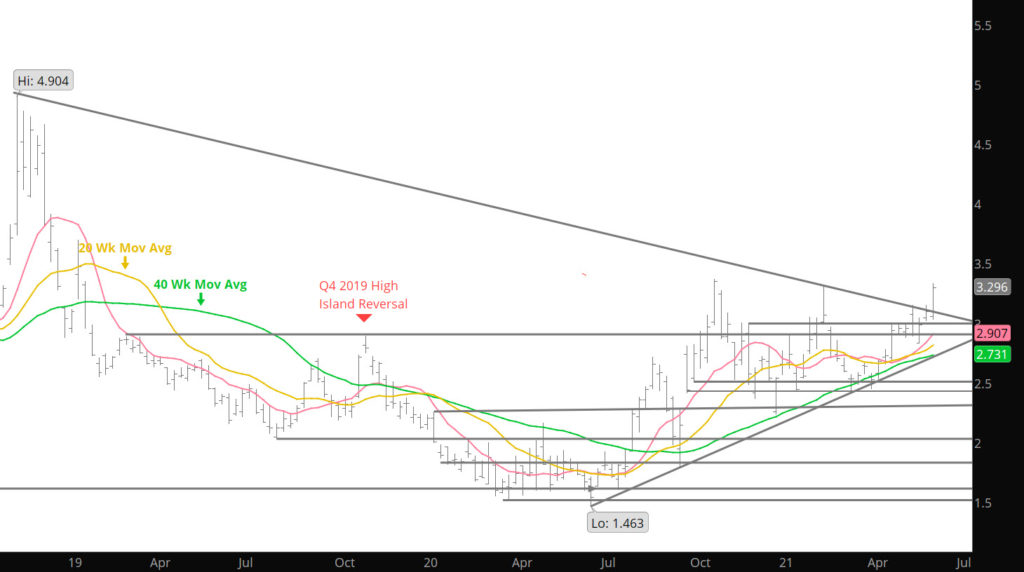
Weekly Continuous

Wow — that’s Natural Gas. The breakout last Friday brought back memories of when Natural was a brutally volatile commodity. Eliminating serious resistance zones ($3.198, $3.25,and $3.329) without blinking and testing the yearly highs with a range of $.181. However, perhaps the market got a little too exuberant when it tried to take out the Jan high of $3.329 (it traded just $.001 above) or the late Oct/Nov high of $3.396, before retracing the gains but still closing the week at the highest weekly close since that late Oct rally.

All of that action, left prices over the 2 standard deviation band above the 20 week moving average (chart below) and had prices hitting the extreme zone of the daily RSI chart and approaching the extreme zone in Weekly chart (see Daily further below).

To read The Daily Call you must be a subscriber (Current members sign in here. ) Start your subscription today.

Prices Firm Above $3.00
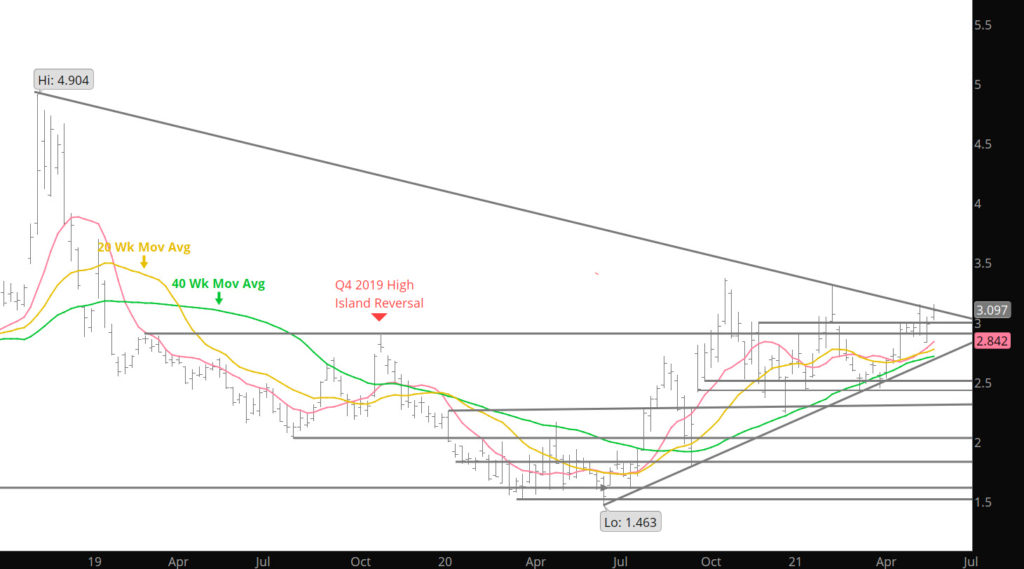
Weekly Continuous

Discussed my thoughts that the high for Q2 may not be in last week and I do not consider the retest of the earlier high of $3.15 last week to fulfill my expectations. That said, last week’s close was the highest weekly close in the July contract suggesting strength coming into this coming week. We have seen this type of activity several times this spring where the week ends well bid or well offered only to see a reversal when it opens the following week. I am not convinced the $3.15 is the Q2 high and would prefer a retest of support, followed by a rally that defines the Q2 high.

Prices did close right on the downward sloping trend line off of the Nov ’19 high that forms the resistance area for the “wedge” discussed previously. Last week’s action occurred with higher volume and gaining open interest which are both confirming market internals to higher highs yet to come.

To read The Daily Call you must be a subscriber (Current members sign in here. ) Start your subscription today.

July Takes Over
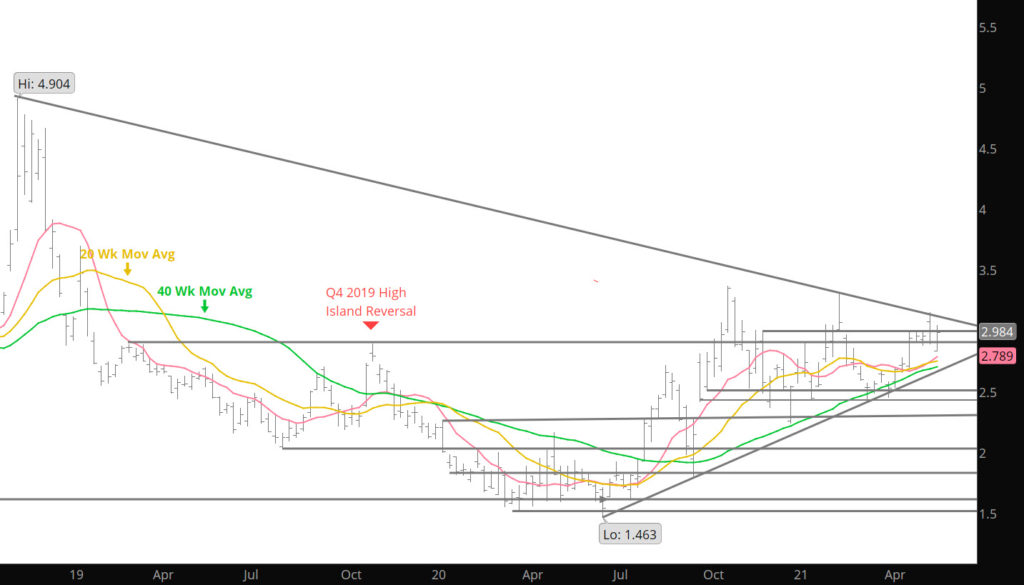
Weekly Continuous

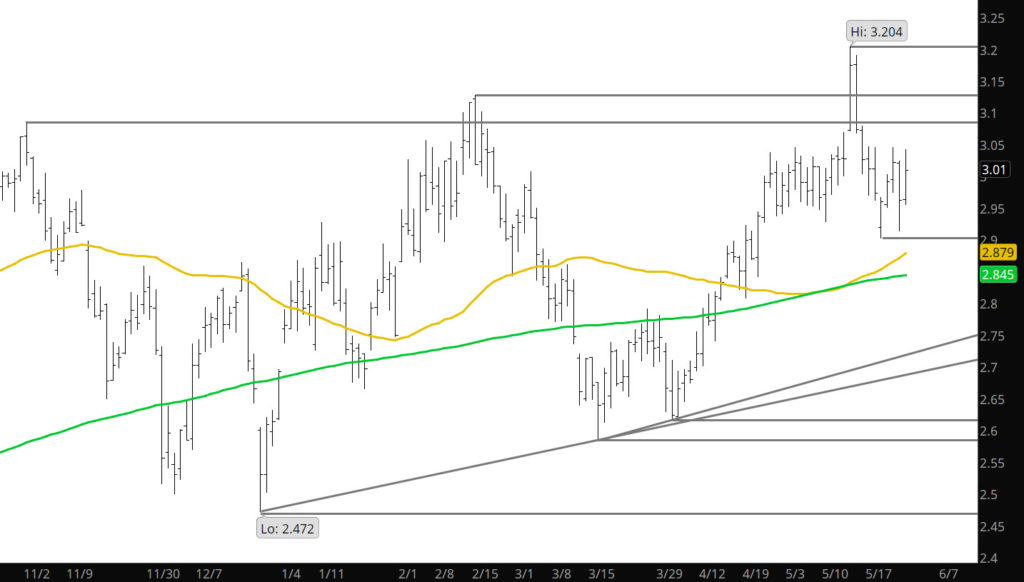
June opened the week with a gap lower on Sunday night only to reverse and close the gap — settling at the higher end of the range it had traded most of the month. Once June was off the board, July, which had followed June’s directional movements, gave up the expiration related gain, retreating to retest its gap lower opening. July had begun trading at 2.920, traded to 2.903 and then rallied to 3.046. Thursday’s low at 2.914 along with June’s pre – expiration low daily close (2.886) likely redefines the key support zone. The new prompt recovered again from that support in typical low volume pre – holiday trade to end calendar May at 2.986 after ending April at 2.978 (developing a theme here). All of the Q2 months have traded down to lower levels, but all were also well – bid into expiration. You may recall that last year those Q2 months were far from well-bid after trading earlier lows.

Spot July Contract

The interesting chart is the Spot July contract which shows a higher low after each rally since the low of July last July. Different from the Continuous chart above, the highs in July have continued to be higher than the previous high which is variant to the Continuous price action. While the highs attained last month ($3.15) fulfill the rally of Q2 over Q1 lows (average rally) I am not convinced that that will turn out to be the final Q2 high. The prompt chart suggests that July has not finished its run.

To read The Daily Call you must be a subscriber (Current members sign in here. ) Start your subscription today.

Failure At Near Term Resistance
Weekly Continuation

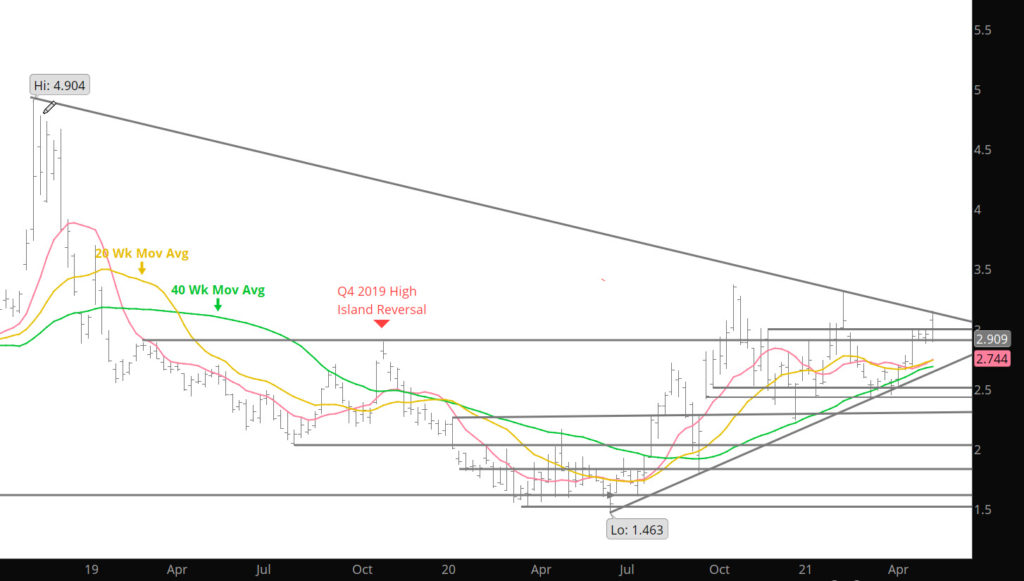
Many of you commented last week that the price action reminded you of Feb ’21 when the market rallied (primarily on short covering) only to reverse by the end of the week forming a distinct bearish weekly reversal. Great observations– while the Feb rally to prices just short of the early Nov ’20 highs, last weeks rally stopped on the declining trend line of resistance (Nov ’19 highs and the Feb ’21 high). The reversal was quite sudden (similar to Feb) and left a bearish reversal.

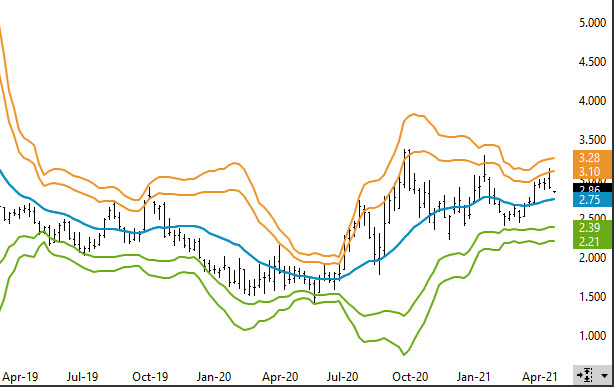
Weekly Continuous with Bollinger Bands

The failure at the trend line was also confirmed by the failure at two standard deviations over the 20 Week SMA in both the Feb run and last weeks. All of this occurred on gaining volume and open interest- not supportive of large future gains in the immediate future.

To read The Daily Call you must be a subscriber (Current members sign in here. ) Start your subscription today.

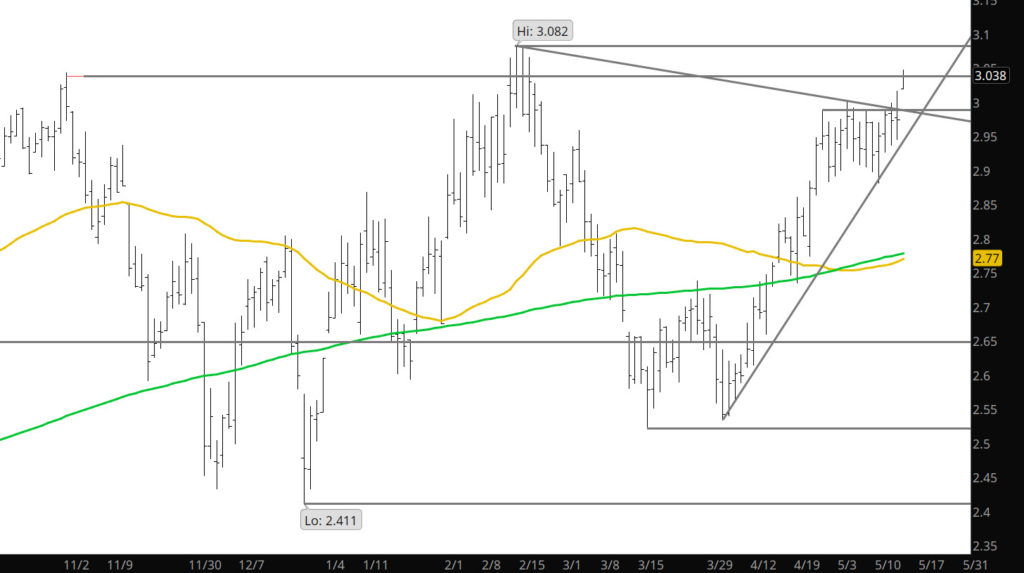
Short Term Break Above
Weekly Continuous

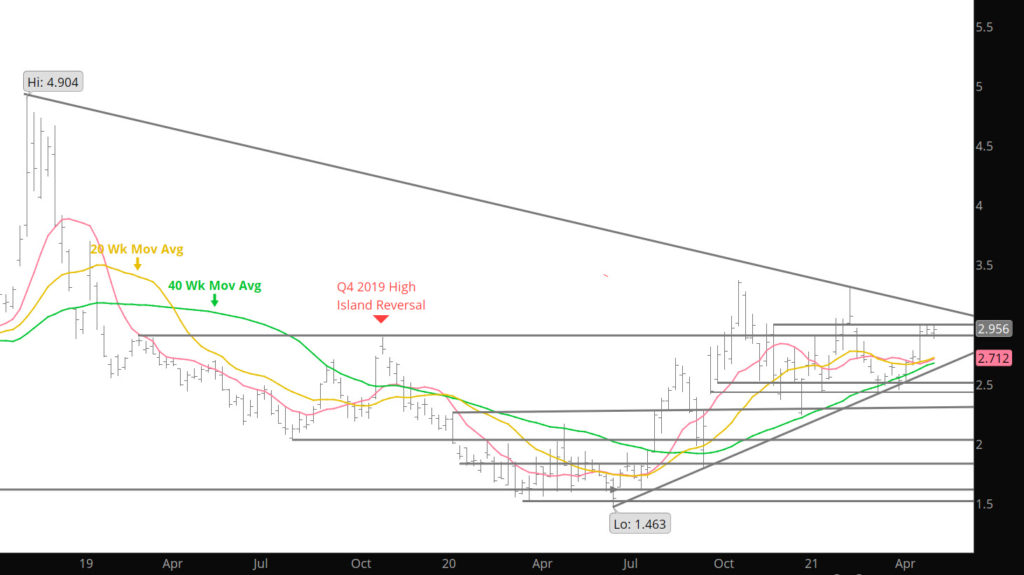
Last week provided a brief break above the key $3.00 resistance area, only to find the sellers that have appeared on previous tests, which sent prices back to the middle of the previous range the Jun contract has provided us. The run did send prices to the highest price for a prompt contract since February 22nd. The close last week did not provide a closing break above the declining trend line from the Feb highs, but early trade on Sunday night has broken the aforementioned trend line.

Spot June Contract

Last I mentioned the upside momentum that June built coming off the April low(gains of .149, .064 and .113 in three of the weeks).  Last week, momentum seemed to be exhausted with a fourth straight gain of only .027 and those gains were associated with slightly lower volume (week over week).  Consolidation (.$30 gain) may be occurring in the June contract but I would of expected significantly lower volumes under that scenario.

To read The Daily Call you must be a subscriber (Current members sign in here. ) Start your subscription today.