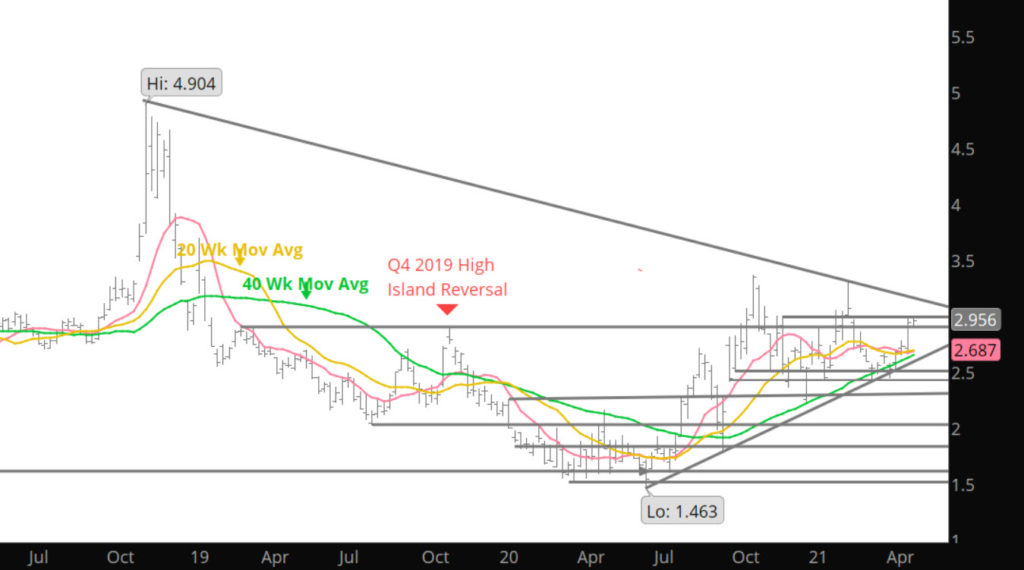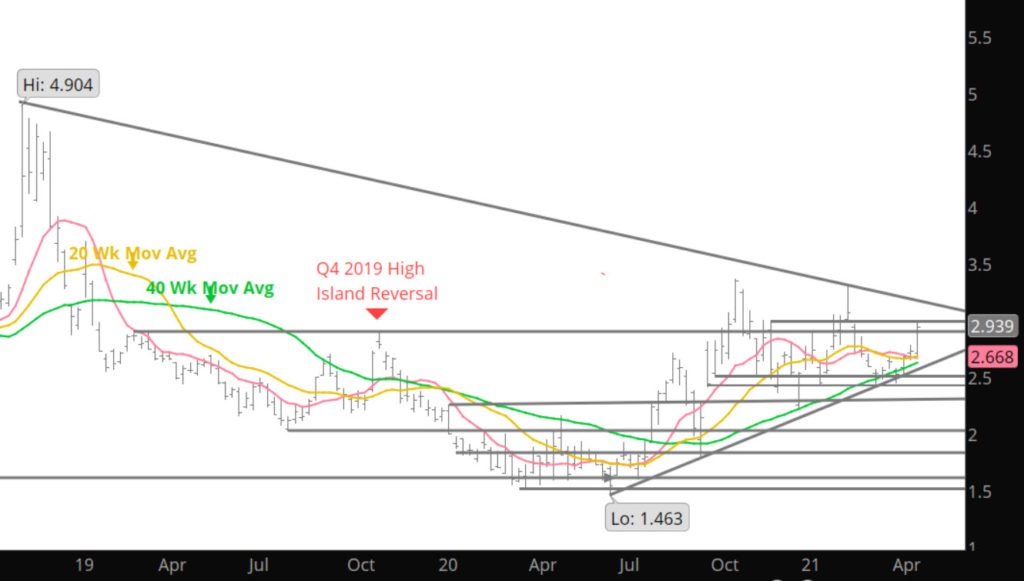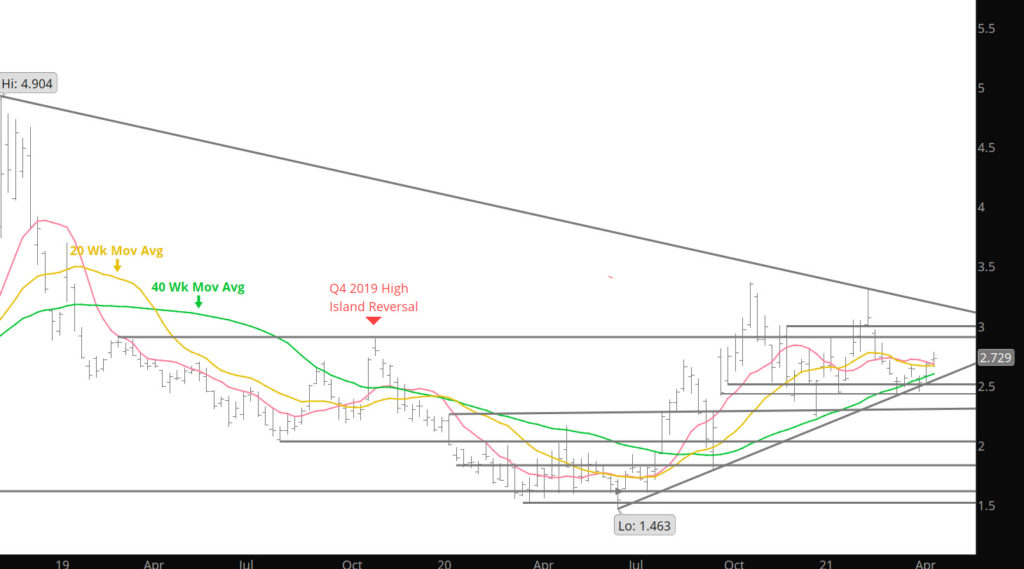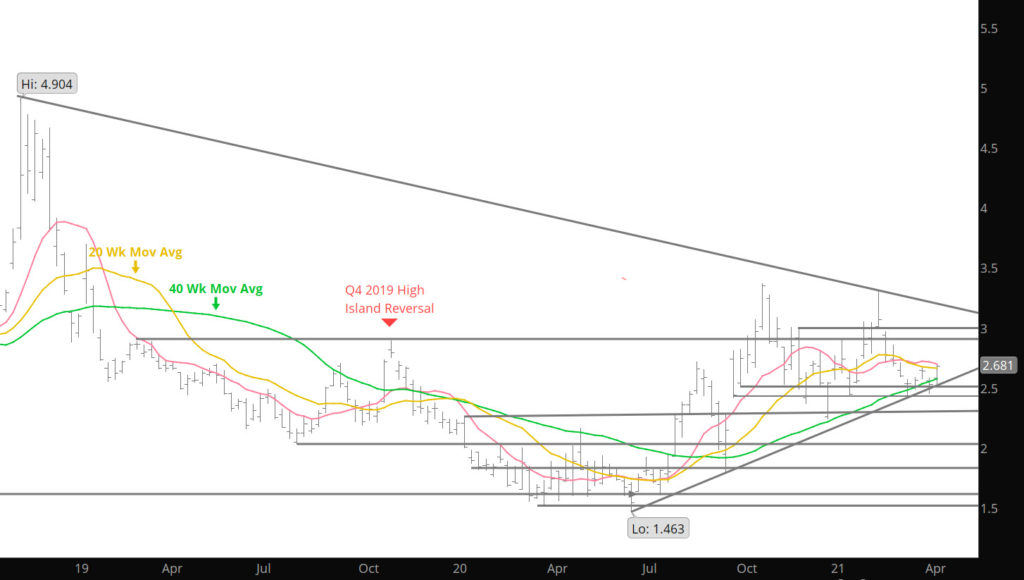
Prices Test Support a Higher Low

Weekly Continuation

The new week began with a gap lower through that ascending support (the original gap was $5.400 – $5.299 but was quickly narrowed to $5.400 – $5.370) followed by extension of the decline to a test of the continuation 50 day SMA (the first test of this commonly followed technical indicator since the August low(prompt gas has not closed under the 50 day SMA since April 21st). After trading to a new low for its tenure as prompt, the now soon to expire prompt recovered most of the week’s loss (including narrowing the week opening gap to 5.400 – 5.379 before fading to close $.13 lower. That established lower closes for the last two weeks for the first time since weeks ending 08/13 and 20 and the second time since 03/12 and 19, have substantially moderated the extreme short term overbought condition.

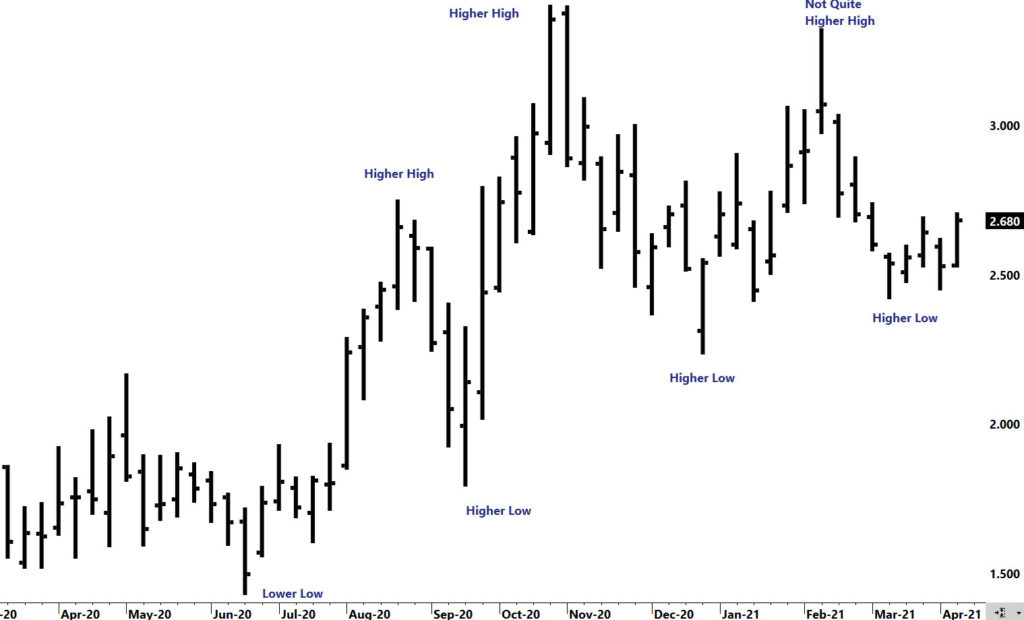
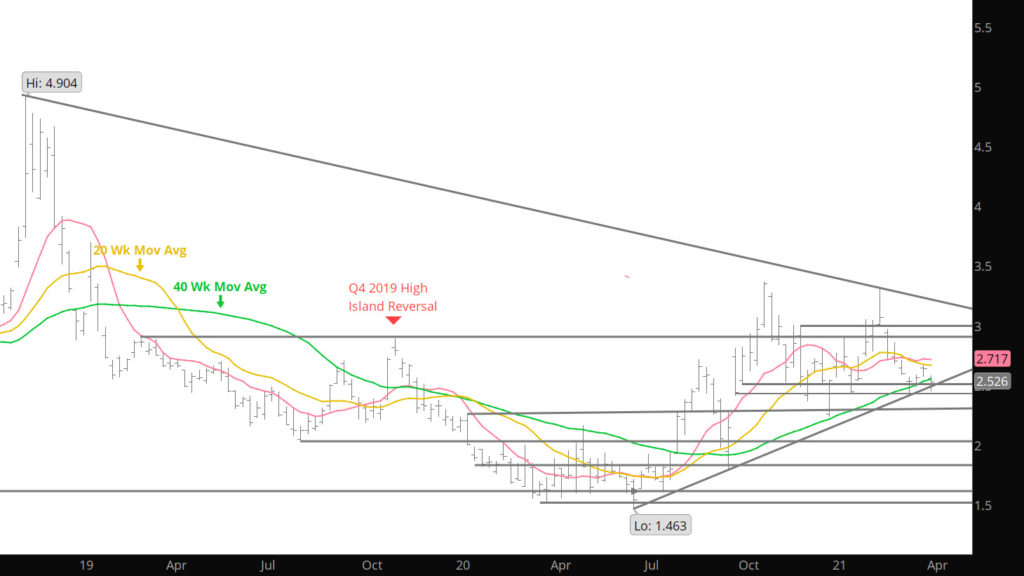
A week ago the technical indicators had returned to neutral for the first time since early summer with the violation of resistance presented by the October ’20 and February ’21 highs. This week’s trade weakened further but remains neutral as prompt gas appears to have recovered from quantifiable support including having traded a higher low. The last seven expiring monthly contracts have been well – bid into settlement (with three of the last four) trading the highs of their tenures as prompt on their last trading day (August traded its high two days before). Expect prompt gas to construct a series of lower highs and high lows during the coming weeks. Then an extension of the rally during late Q4 and/or Q1 is likely to occur. The last significant higher low was the September low at 4.735, this week’s trade to and recovery from a low of 4.825 is a successful test of support and creates that higher low. Together with last week’s lower high (5.964 v 6.466) prompt gas appears to have begun the construction of a “coil”. Unless or until important technical support (the September and to date October lows $4.735 –$4.825) is breached continue to expect higher prices.

To read The Daily Call you must be a subscriber (Current members sign in here. ) Start your subscription today.

Expect Volatility to Continue

Weekly Continuation

The Nov contract traded through the September high marking the fourth straight year that the Nov contract has done that (see last week’s conversation about Q4 runs and sarcasm), further into the resistance area between the January ’09 and January ’14 highs (6.240 – 6.493) before reversing lower. The reverse sent prompt gas and the coming winter strip closed lower for the first time in seven weeks. However the Q2 ’22 months, summer ’22, as well as the further months strips were higher. Volume and open interest were lower as price failed at a higher high and November closed slightly lower than it had opened when trading resumed on Sunday, suggesting the lack of an appetite for prompt gas above $6.

The elevated level of volatility, the reversals traded this week and previous weeks as prices traded over $6, the near weekly doji (prompt gas closed at 5.556 after opening at 5.628 and traded a new high in between) may be suggesting that Nov contract is vulnerable to a more significant retracement. Like a broken clock, I have been suggesting that the rally is overextended and due for a correction for the last month or so.

Major Support:$5.416, $5.341, $5.17, $4.88, $4.61, $4.537,$4.375, $4.211, $4.156, $3.92, $3.821,
Minor Support: $5.62-$5.633, $4.728-$4.70, $4.66
Major Resistance:
$5.876, $6.24-$6.493

Unsustainable

Weekly Continuous

I am well aware that many of you are frustrated with me continually talking about the over bought status of natural gas and the technical indicators that just confirm that status. When does the market moderate — none of us have a clue but I wanted to bring you some additional information supporting some consolidation in the price action. The natural gas prices have settled higher for six consecutive weeks during this run. Of those six weeks, prices started with strength (either Sunday night or Monday) four times and opened the week lower the other two time. Obviously, regardless of prices starting weak early in the week, the market finished higher by Friday.

Another element to the current price run is the range of prices as measured by the ATR (Average True Range) which measures the price range from high to low for the week or the day. In the Weekly chart below you can see the ATR readings for the last 15 weeks, noting it is at levels not seen since Oct ’18 through Jan ’19.

To read The Daily Call you must be a subscriber (Current members sign in here. ) Start your subscription today.

A Reversal After A Reversal

Weekly Continuous

I am at lost to explain but the market seems to be telling us that it will be rallying into expiration for the seventh consecutive month. Last week we had a bullish reversal in the weekly close after the declines the previous week on a bearish weekly reversal after trading a higher high. There is a difference in the two reversals as the weekly declining reversal was on a higher volume and declining open interest, suggesting additional declines last week. Those declines were extended early last week, extending below the Q4 ’18 highs, then reversed after the storage report on Thursday. Last week’s reversal off of lows was on much lighter volume during the rally.

My comments last week alluded to what to expect later in the Q4 and continues to suggest that the rally has further to go, but not sure it will occur immediately.  If prompt gas intended to test the recent high in the near – term, there would have been more substantial volume during the recovery and rally last week.  It seems more likely that prompt gas constructs a continuation “coil” between those two extremes defined by the reversals ($5.65-$4.73) create short series of lower highs and higher lows, while the daily volatility (including the extremely overbought condition- weekly RSI), moderate.   

To read The Daily Call you must be a subscriber (Current members sign in here. ) Start your subscription today.

Dare We Mention Correction

Weekly Continuous

Prompt gas spiked to the highest price since February ’14 then fell 10.7% in less than three trading days. Some would consider that price action a reversal. For four straight weeks, prompt gas and the winter strip closed higher prompt gas and the coming winter strip closed higher even after the declines. For the first time since ’00 there was no definable price decline during the period bracketing Labor Day which, historically is one of the most consistent price negative periods all year.

Key elements of the declines / reversal was the declines in open interest (liquidation of over 30,000 contracts) with the highest weekly volume since last January. The highest volume day of the week was the reversal day (Wednesday) with over 778,000 contracts traded. That type of volume and reduction of open interest suggests that a correction was in process which was confirmed with trade later in the week.

To read The Daily Call you must be a subscriber (Current members sign in here. ) Start your subscription today.

Run Runs Onward and Upward

Weekly Continuous

The last three weeks have provided over a $1.21 gain in natural gas prices and three consecutive weeks of prices rising over $.45. This has left the market over bought from several measures. One of the best measurements is how far prices have gained are over the 20 week SMA (simple moving average). The chart below exemplifies that the market closed last week over 2 standard deviations above the 20 Week SMA.

Weekly Chart with the 2 and 3 Standard Deviations Above the 20 Week SMA

The key to this chart is how the market remained at or slightly above the 2 deviation band early in this summer’s run. Then for a few weeks, price action went flat and retraced a little of the gains. This is normal for bull runs as the market needs to consolidate the gains before establishing the next leg up or a major correction. This will likely occur with the recent run but the timing is unknown. The amount of the declines associated with the decline is hard to measure and the timing is the wild card. Another measurement that analysts will use is the momentum indicator provided by the Relative Strength Index (RSI). In the chart below (it includes the total open interest analysis) note the gains of late and over time send the RSI over 80 (considered the extreme zone). Similar to the standard deviation study, they don’t remain at these level for long periods of time with out some consolidation. The RSI is a calculated momentum process looking at history, the deviation study gives you a target for the upcoming trade.

To read The Daily Call you must be a subscriber (Current members sign in here. ) Start your subscription today.

Risky Week With IDA

Weekly Continuation

Last week brought the highest volume traded during its tenure as prompt as September became the sixth straight contract month to rally into expiration- the trend continues. Some fun facts — from low to high expiring September traded a range of $.559 which was the widest weekly range not including an expiration gap since the volatile decline following the Q4 ’18 high. With the expanded range (and volume) traded during the expiring prompts final two days September first extended the rally from the March ’21 low to a new high ($4.217 vs $4.205) and to a new high daily close ($4.184 vs $4.158 on 08/04) and then to the highest settlement since December ’18 that went off the board at 4.715.

Discussed during early August, when September contract first traded to $4.205, market internals did not support a higher high.  Volume and open interest were both lower than they had been five weeks before on a rally.  Those divergences strongly suggested that although the intermediate and long – term trends were higher the rally was on shaky ground and need a consolidation period (or a correction) was due.  September achieved that goal by dropping $.471 (+11%) over the next few trading days, closing higher only three times.  While expectations were for further declines were issued here as the reversal day low and weak close on Friday (week ago), are not the actions setting up the brutal blow out to the upside experienced last week.

To read The Daily Call you must be a subscriber (Current members sign in here. ) Start your subscription today.

Strong Lower Lows

Weekly Continuous

Prices traded down to interim support before garnering the strength to form a nice rally. Support from declines were found by the lower closing low suggested that significant support presented by the continuation 50 – day SMA and the trend line rising from lows traded in late May and late June. As noted last week this was the initial area for prices to be tested.

A mild warning here, in addition to that reasonably formidable technical support being tested and rallying –the last five expiring contract months have shown a consistent tendency of rallying during the final week of their tenure. Historical analysis continues to indicate that prompt gas…whether it is September or October, is vulnerable to more significant decline but given the tendency to rally into expiration…every month since and including February except March has (Feb closed higher each of its last three days, April three of the last four, May four of the last five, June two of the last three, July each of its last five and August eight of its last nine), it seemed prudent to alert traders of that trend that they have forgotten.

To read The Daily Call you must be a subscriber (Current members sign in here. ) Start your subscription today.

Historical Seasonal Weakness Begins

Weekly Continuation

After last week’s highest weekly close since December ’18, Sept made one more low volume push higher but failed well below the last two weekly highs at 2.187 & 2.205.  The reversal from a just slightly lower high (2.185) traded with the highest volume since the end of calendar June and continued to increase as the prompt fell.  Average daily volume for the week ending 08/13 increased an estimated 95,000 contracts and added up to the highest total in six weeks. This may have been the beginning of the seasonal correction talked about here for weeks.

Further evidence supporting the weakness theory lies with September declining for the second time in three weeks with a closing high sandwiched between.  The last time there were two declines in three weeks (continuation) was during the final stage of the weakness that ended with the March Q1 low. Since then price declines have been limited to a single week which were all followed by a higher closing high or one unchanged. (although there was that one unchanged close for week ending 07/16…the rarity of which was noted at the time). 

To read The Daily Call you must be a subscriber (Current members sign in here. ) Start your subscription today.

Yet Another New High

Weekly Continuation

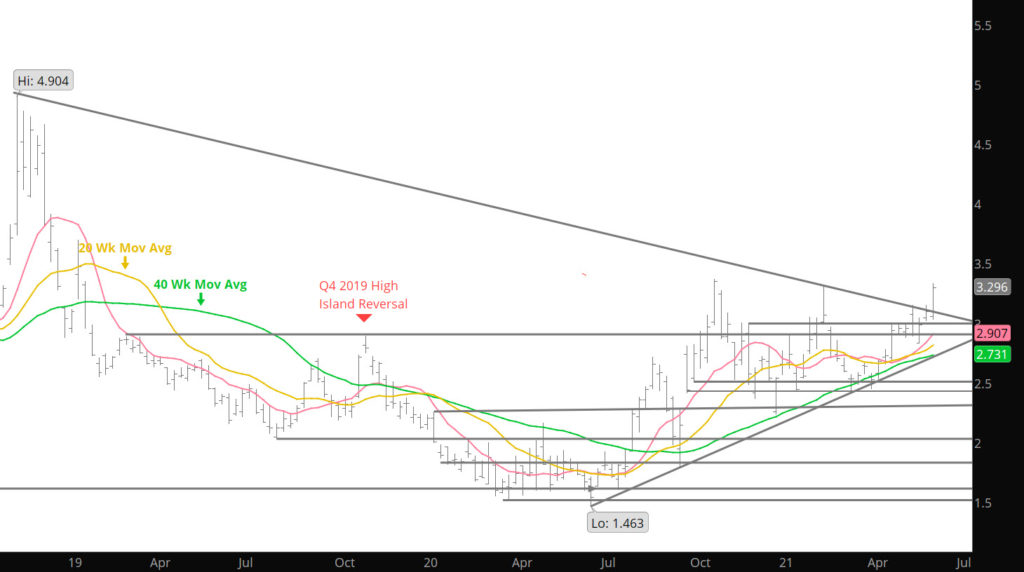
What more can you say the uptrend that began more than a year ago (alerted at Ecom in the fall) tested support after expiring January collapsed to the December low, and again following the March test of the calendar January low continues. Nowhere is the rally more evident than in the further differed contracts. Since that last test of support –prompt gas has traded four higher monthly lows, and now five higher monthly highs while decisively trading through resistance clearly defined by the October, November and February highs regardless of the expectations of a significant correction.

The weekly RSI , which has reliably warned of significant highs during the entire history of natural gas trading, last week recorded the second highest reading since February ’03 (when it was higher for only one week). Other technical indicators are show some potential divergences to current trend. The failure of volume to confirm higher price highs last week and the previous week and that volume during July as prompt gas rallied to close at 3.914 was significantly lower than during calendar June, which closed at 3.650. This week’s higher high was not confirmed by a higher daily or weekly RSI reading.

To read The Daily Call you must be a subscriber (Current members sign in here. ) Start your subscription today.