
To read The Daily Call you must be a subscriber (Current members sign in here. )
Category: Weekly Detail
Price Action Still Negative — But a More Bullish Bias
To read The Daily Call you must be a subscriber (Current members sign in here. )
Bias Negative But Moderating
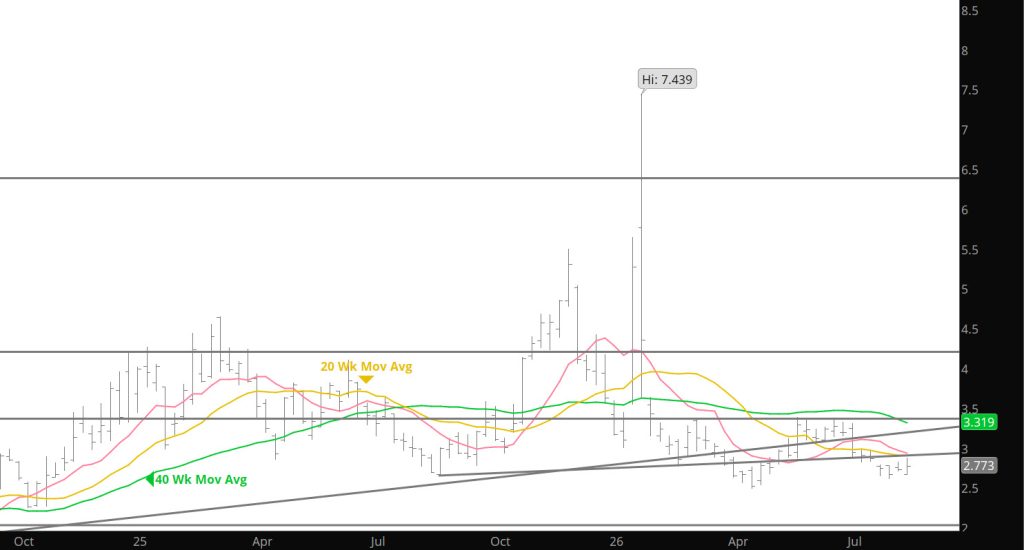
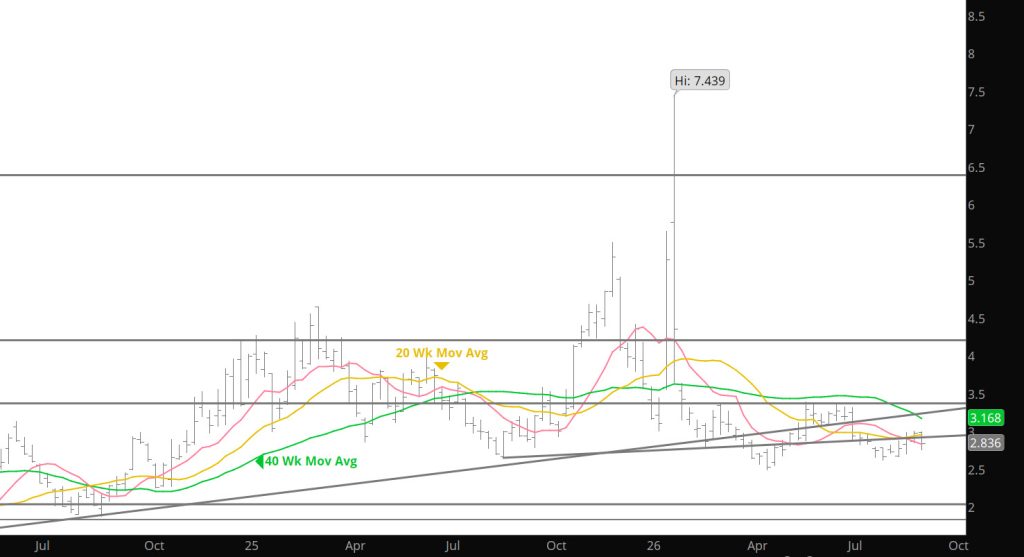
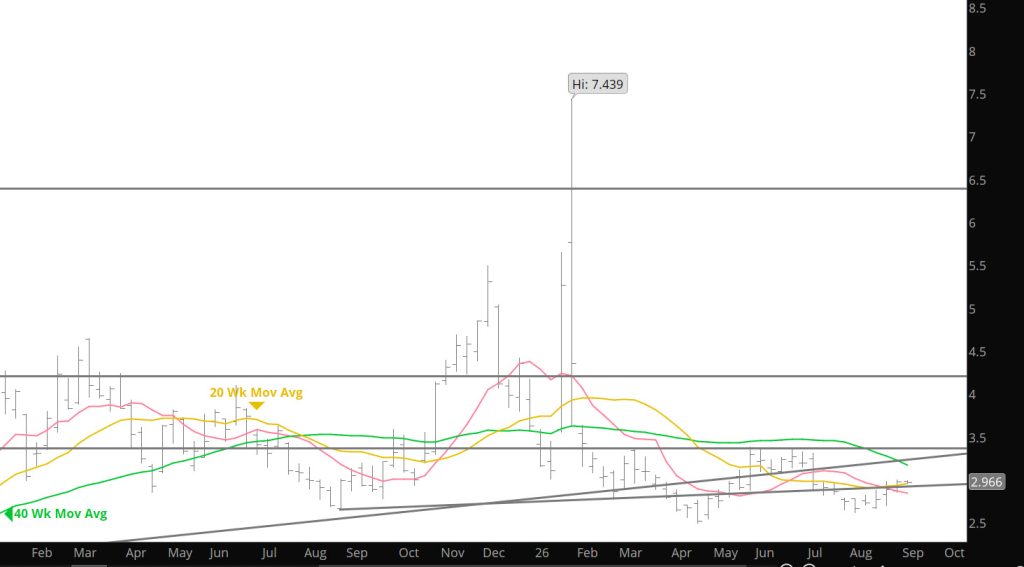
Weekly Continuous
Several subscribers asked to have the Weekly and Daily Calls continue past the end of August. I will continue to post as my travels will allow. The primary reason for my ending the Call is my inability to attain the internet while I travel. So there will be many days when the Daily is unavailable but I will try to publish the Weekly each week through September.
Last week created not quite a textbook doji (no new low or high traded) the low volume test of those lows and immediate recovery seemed to suggest exhaustion…there was simply not enough sellers/volume to push through the already well – defined support. That shortage of new sellers triggered a rally…some rallies are less a function of a wave of buyers than of a shortage of sellers. The rally that extended through last week’s high closed all the continuation gaps, although there is still a sliver of a gap left on the September chart (between $2.875 and $2.877) and a slightly wider one on the October chart between $2.898 and $2.909, before September faded from the well – defined resistance to end its last full week as prompt about a nickel higher than August settlement. While it might be a little picky shows the first higher daily closing low followed by a higher daily closing high in a long time and is just another one more red flag warning. For the week, prompt gas traded an “outside” week reversal higher.
Clients may recall that “outside” week reversals (when prompt gas opens lower, trades through the previous week’s low that reverses to trade through the previous week’s high and ends the week higher have historically been the gas market’s preferred method of communicating that a significant, unsustainable low has traded. The absence of volume, which was less than a week ago, is likely a disqualifying factor. That said, a year ago during the week beginning 08/25…the week that the 2025 annual low traded, prompt gas also traded an “outside” week reversal with less than impressive volume.
“Outside” week reversals are relatively rare chart patterns…and usually carry some significance into coming weeks, but an “outside” week with a range of only $.237 is even rarer and was only “outside” because last week’s range was $.140 (counting the opening gap). Further, essentially the “outside” week’s range just retraced the ranges of the last four weeks and the close was lower than the first of those ($2.773 v $2.792) but was the highest weekly close of September’s tenure as prompt ($1.747, $2.662, $2.733 and $2.773). That’s what range bound trade looks like.
Notwithstanding the less than remarkable “outside” week reversal, there are warning flags flying in the gas market…and they are flying at a time of year that has in recent years marked the low ebb of the price negative Q3 seasonal. This week’s unremarkable reversal is just the latest one.
The consensus of technical indicators, which remained neutral (with a fluctuating bias) for the entire second calendar quarter, is negative for a sixth week…but having improved two weeks running, is just so. A higher close next week will likely result in an upgrade.
The weekly MACD, our primary “lagging” indicator is negative for a seventh week. The daily MACD turned up a little last week to the positive side of neutral, is now positive. The weekly RSI is positive for a second week. The very sensitive daily RSI is positive after a bullish momentum divergence two weeks ago.
Market internals, which improved in both of the last two weeks are now neutral. Volume fell as prompt gas rallied while open interest increased 20,800+ after falling 15,500+ last week. Since 06/25 with price falling from the Q2 high the total number of contracts outstanding has increased from 1,610,728 to 1,734,658. My guess is that the +/- 125,000 increase creates a whole bunch of vulnerable short positions Prompt gas remains below all important moving averages. The total range traded this week was $.237, the last three weeks $.140, $.216 and $.194. As previously said, red flags are being waved by the absence of volatility.
As previously discussed, full maturity of the annual cycle is upon us During the last week or so of September’s tenure as prompt. The short – intermediate term cycle measured from the April low is also fully mature. Maturity of the cycle from the June Q2 high will occur between mid – September and October expiration. Guesses are that the Q3 low cycle is forming and will likely continue through the Labor Day holiday.
Major Support: $2.676, $2.640-$2.57
Minor Support/Resistance : $2.87-$2.84, $3.16-$3.148, $3.136, $3.02-$2.97
Major Resistance: $3.35, $3.486-$3.494, $3.567, $ 3.736
Still Negative — But Improving
To read The Daily Call you must be a subscriber (Current members sign in here. )
Consensus Remains Negative
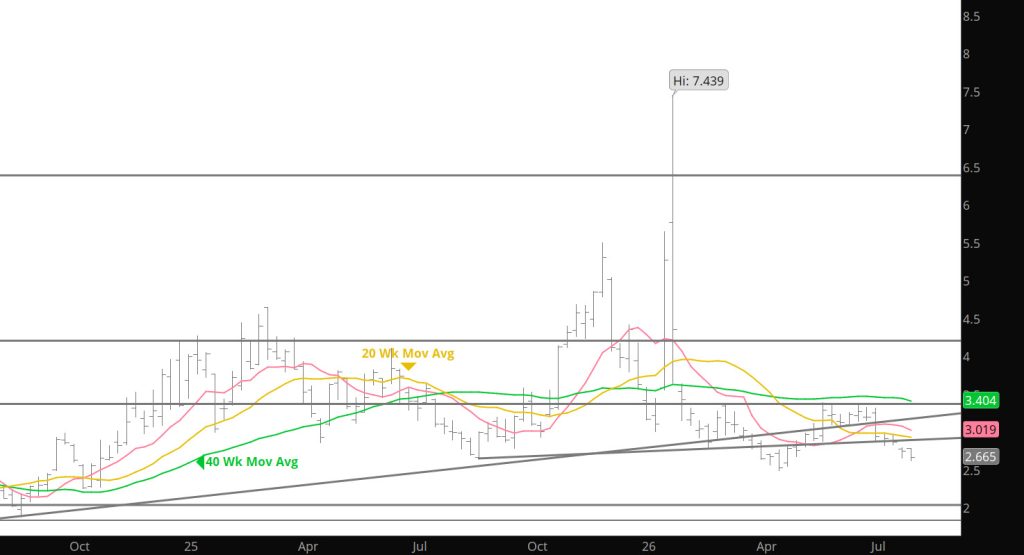
To read The Daily Call you must be a subscriber (Current members sign in here. )
Announcement
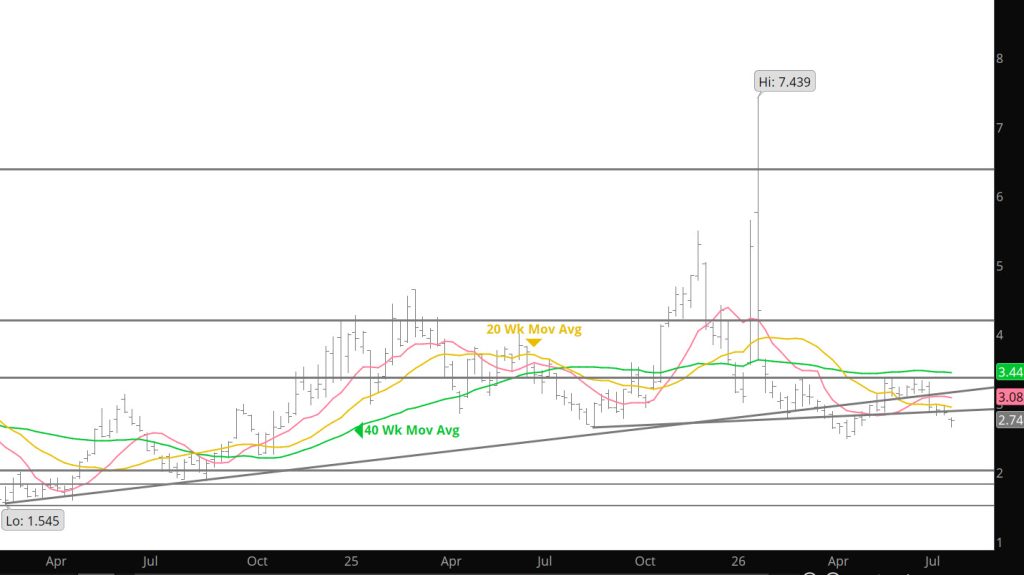
To read The Daily Call you must be a subscriber (Current members sign in here. )
Trade Suggests Lower Low for Aug
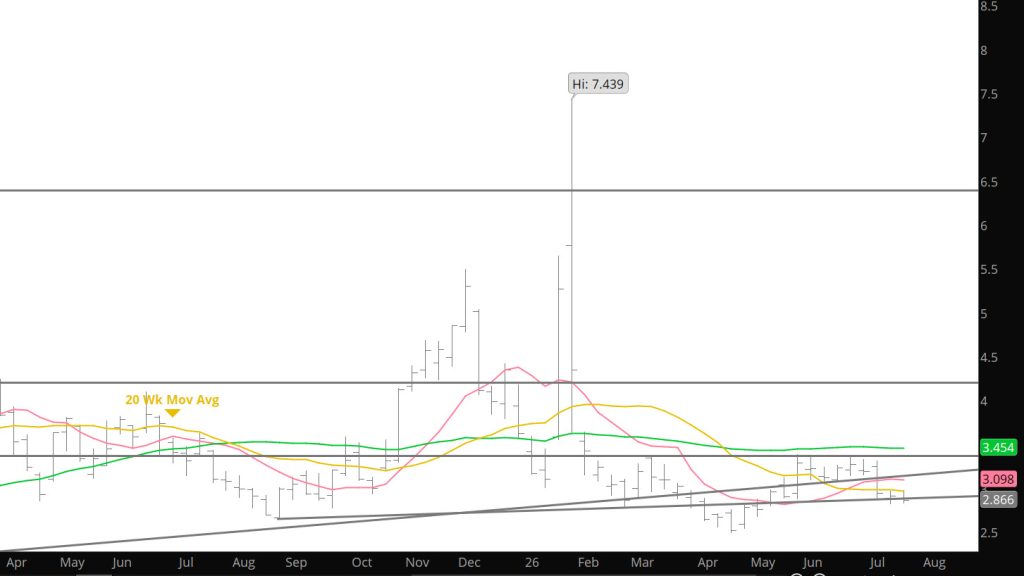
To read The Daily Call you must be a subscriber (Current members sign in here. )
Operating In Tight Range
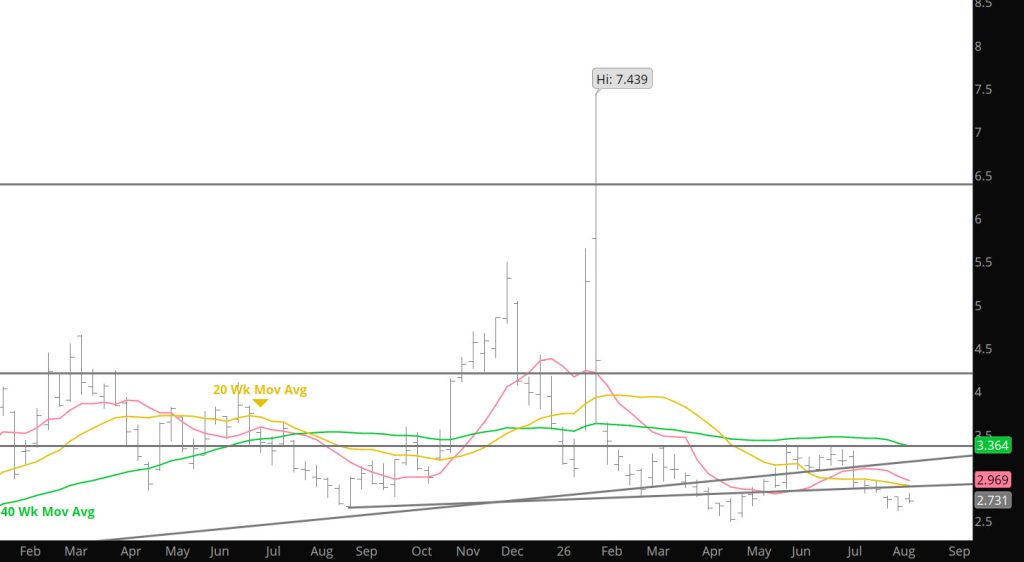
Weekly Continuous
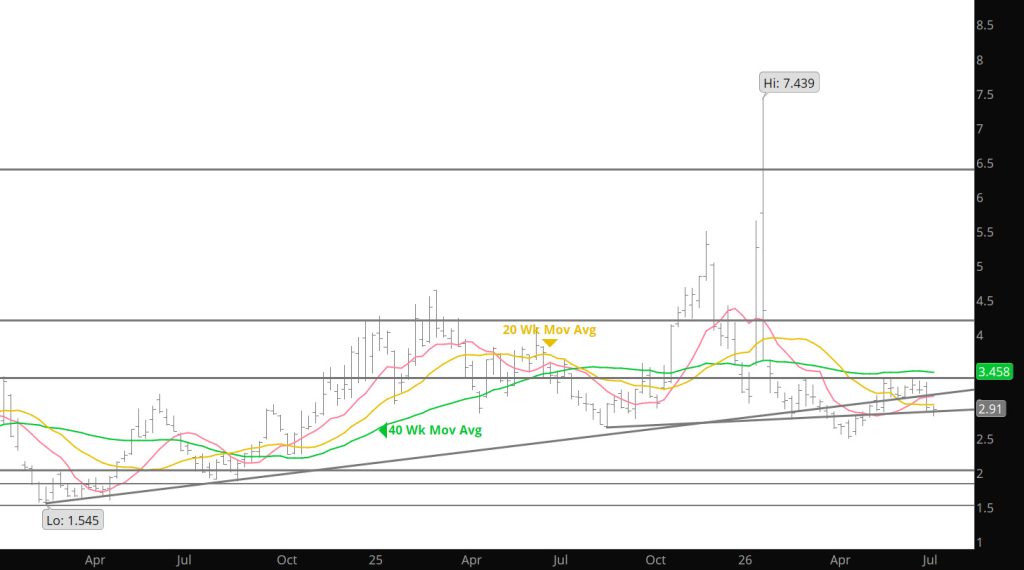
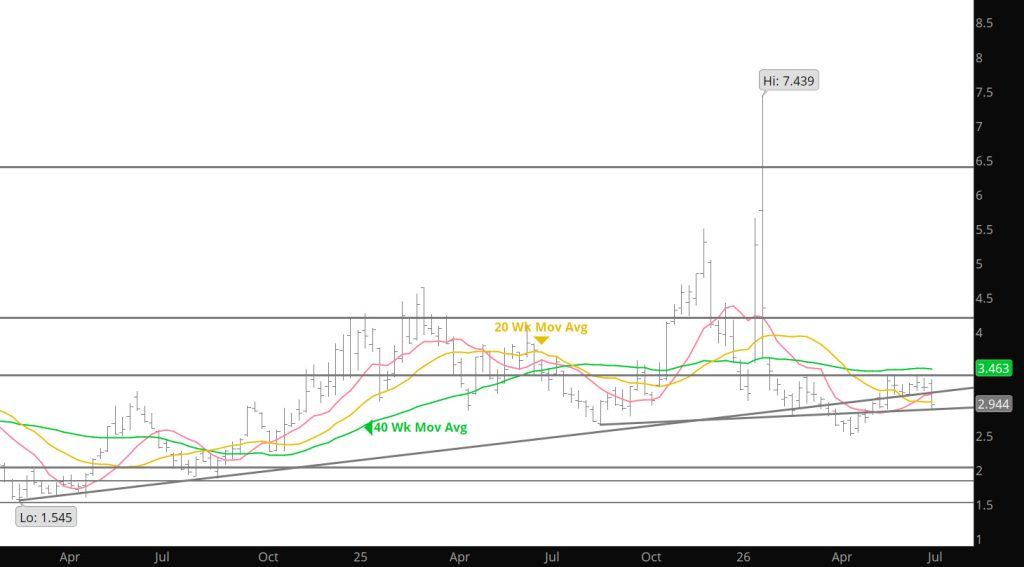
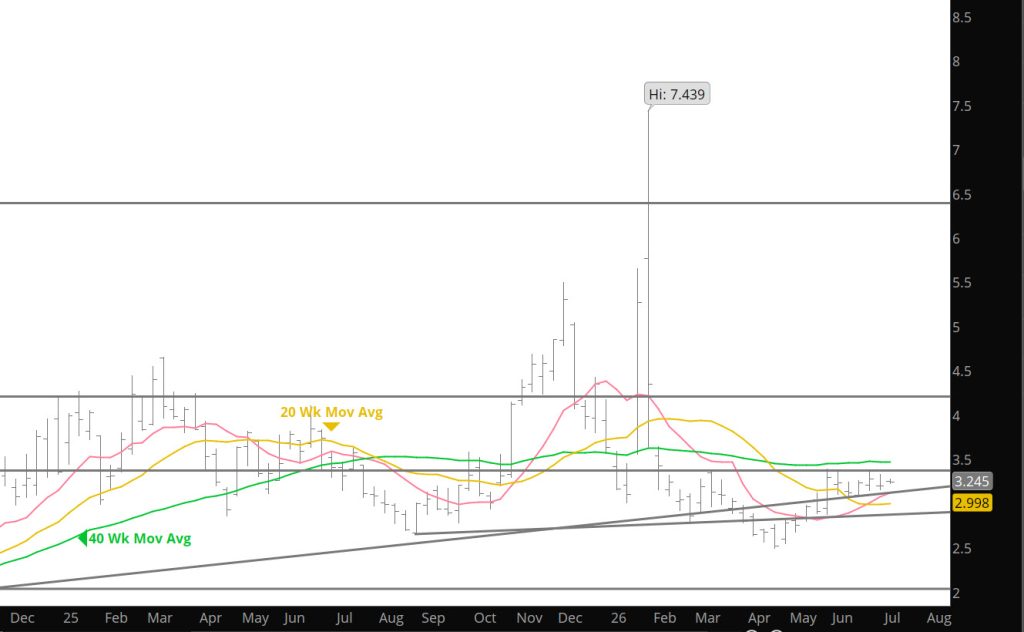
After losing $.256 a week ago August closed $.029 lower, while trading a total range for the week of $.145 that may suggest at least a temporary loss of downside momentum. August gas spent six trading days testing the same zone that provided resistance during the first half of May and then support for expiring June just after Memorial Day . Volume during the last five of those six days was lower than the corresponding day the week before…no technical surprise that prompt gas held the support. As a rule, a volume increase is required to overcome the bids at a defined support zone. August traded an outside day reversal on Thursday and posted a low daily close of $2.858…the lowest daily close since then prompt June closed at $2.843 on 05/12. If August was going to breakdown, it missed a good chance, but the sufficient offers clearly were not present.
On a daily closing basis, prompt gas closed between +/- $2.550 and $2.850 for twenty six days between April 1st and May 13th (there was one close higher, three lower during that period). That zone was tested this week…expect it to continue to present daily closing support but also that it will be retested during late July, August and early September. Note that September is currently $.035 discount to August. A year ago on 07/17 September closed $.034 premium.
Following the seasonal pattern during July…and particularly the period bracketing Independence Day, August was expected to trade a low between the 10th and 20th…this week’s low traded on 16th and brought the early July decline to 18% (vs a five years average of 18.9%). While as mentioned in previous editions, there have been years when August faded for its entire tenure as prompt, far more often a post – holiday mid – July low precedes a rally to test resistance. Expect the zone between $3.10 and $3.15 is a likely target before a fade into contract expiration.
A year ago August ’25 traded a temporary oversold, seasonal low on 07/09 and then rallied to retrace a little less than 50% of the decline from the Q2 high, tested similar resistance then failed. Expect seasonal pressure to ebb and flow weighing on the entire maturity curve for another sixty days. The average of the last twenty declines from Q2 highs is 31.6%…which would suggest some likelihood of a test and possible undercut of the April low. Full maturity of the annual cycle will occur in 4 – 5 weeks, or roughly during the last week or so of September’s tenure as prompt…which will also be full maturity of the short – intermediate term cycle measured from the April low. The best guess is that the gas market will feel seasonal pressure into that late August/early September period and the period bracketing Labor Day (which is 09/07 this year).
The consensus of technical indicators, which remained neutral (with a fluctuating bias) for the entire second calendar quarter ended the week negative for the first time since just following the failure at the January high. The weekly MACD, our primary “lagging” indicator, that had remained positive for eight weeks rolled over. The daily MACD and weekly RSI are negative and are not yet giving extremely oversold warnings. Market internals which were neutral with the suggestion of a price negative bias last week improved a little. Average daily volume (which accelerated significantly a week ago as prompt gas fell hard) and the highest since the two weeks leading into and of the week of the March high, dried up as August traded a lower low…a technical positive.
Open interest increased 21,500 contracts as August edged lower…my guess is that increase can be attributed to short sellers getting a little too far out over their skis. Thursday’s total was 1,672,716 total contracts outstanding. The last time open interest was as high, 1,676,152, was week ending 05/29. The time before that, 1,680,104, was the week immediately preceding the January low. Those are the high week ending totals since last October…both accompanied a turn in the market.
Major Support: $2.640-$2.57
Minor Support/Resistance : $2.87-$2.84, $3.16-$3.148, $3.136, $3.02-$2.97
Major Resistance: $3.35, $3.486-$3.494, $3.567, $ 3.736
Storage Release Breaks Old Support
To read The Daily Call you must be a subscriber (Current members sign in here. )
Range Trade Supports a Break Eventually
To read The Daily Call you must be a subscriber (Current members sign in here. )